
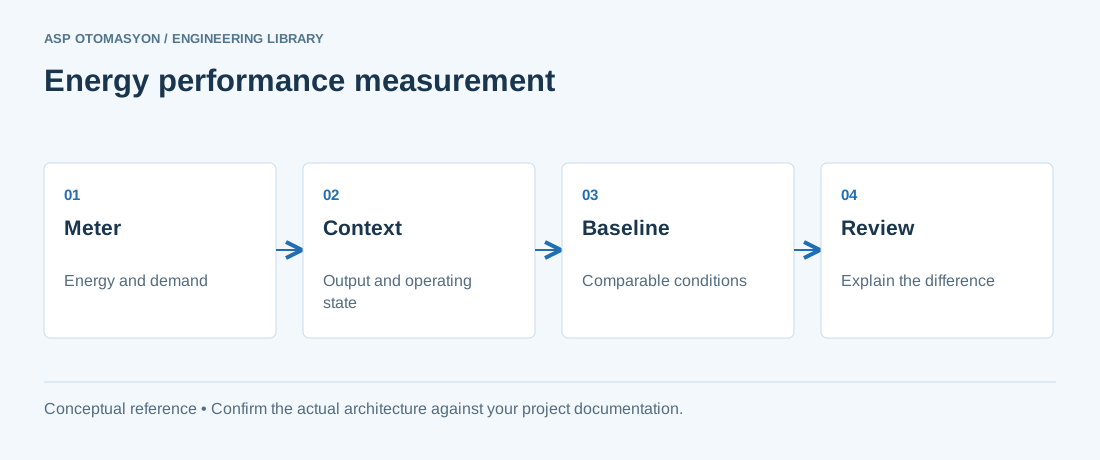
Raw energy consumption numbers are meaningless across time and facilities: a plant that grows production uses more energy while becoming more efficient. The standard that makes energy comparable is Specific Energy Consumption (SEC) — energy per unit of output (kWh per ton, per liter, per piece, per service unit). SEC is the industrial energy metric: it is how plants benchmark against themselves (month over month), against industry peers, and against best practice — and it is the basis of the energy performance indicators defined in ISO 50006.
Defining SEC
SEC = energy used / useful output, where:
- Energy — all relevant carriers (electricity, gas, steam, fuel) converted to a common unit (kWh or toe), usually expressed as primary energy or CO₂e where decarbonization is the goal.
- Output — the product or service unit that drives the energy use: tons of product, liters, pieces, hours of operation, or a composite (e.g., "tons of dry solids" for dryers — the right output definition is the hardest part of SEC).
The definition decisions matter enormously: output must be the driver of energy use (a bakery's energy correlates with tons of dough, not with pieces), and the boundary must be stable (same systems included, same method of allocation). Two plants with different boundaries will show different SECs without either being wrong — comparability is a definition discipline.
What SEC Is Used For
- Internal trend monitoring — monthly SEC per production unit is the plant's energy health chart; a rising SEC trend is the earliest warning of waste (a leak, a failing trap, a degrading system).
- Peer benchmarking — industry benchmarks (published by associations and energy agencies) tell a plant whether it is in the efficient quartile or the tail; the gap is the improvement backlog.
- Target setting — improvement targets expressed in SEC ("reduce SEC 10% in 3 years") are robust to production changes — unlike absolute kWh targets, which punish growth.
- Investment justification — efficiency projects are evaluated in SEC terms: the saving is kWh per unit of output × the output forecast.
- ISO 50001 reporting — SEC is the typical Energy Performance Indicator (EnPI) in an ISO 50001 energy management system, with the baseline and normalization per ISO 50006 (see the EnPI article).
Normalization: The Hard Part
Raw SEC varies with factors the plant does not fully control — weather, product mix, occupancy — and comparing unnormalized SEC across months misleads (winter SEC is higher in heating-dominated plants even when nothing changed). Normalization separates the controllable from the structural:
- Weather normalization — heating and cooling degree-days explain the seasonal component; normalized SEC removes it (the standard method in building and HVAC energy management).
- Production mix — different products have different SECs; a mix shift changes plant SEC without efficiency change. The fix: SEC per product type, or a mix-adjusted composite.
- Utilization effects — energy has a fixed part (lighting, standby, controls) that does not scale with output; at low utilization, SEC rises. The fixed/variable split (regression of energy vs output) separates "efficiency" from "utilization" honestly.
- Regression-based baselines — the robust method: build the energy model (energy = f(output, weather, …)) from 12+ months of data; SEC anomalies are then deviations from the model, not raw-ratio noise.
Implementing SEC in the Plant
- Choose the output metrics — one primary per plant area (the driver), documented with the data source and the boundary.
- Meter the energy — sub-metering per area (see the EMS article) is what makes SEC per area possible; without sub-meters, SEC is plant-level only.
- Build the data flow — energy data and production data (from the MES/ERP) into one report per month, automatically; a spreadsheet updated by hand is a hobby, not a KPI.
- Set the baseline and targets — baseline period (a representative year), target per year, reviewed quarterly with the production plan.
- Review with the organization — the SEC chart at the monthly performance review, with anomalies explained ("SEC rose 4% — the new product line's commissioning, expected until next month").
Benchmarking Against Peers
External benchmarks exist for many industries (cement, steel, paper, food processing, and general manufacturing via energy agencies and industry bodies). Rules for using them: match the definition exactly (same output basis, same boundary, same energy scope); compare at the right level (plant-to-plant comparisons are often invalid — compare similar processes); and treat the benchmark as a signal, not a verdict — the plant's own normalized trend is the primary truth, and the benchmark's job is to raise ambition.
Summary
SEC — energy per unit of output — is the industrial energy metric: comparable across time and plants, robust to production changes, and the basis of ISO 50001 performance management. Define the output driver and boundary deliberately, normalize for weather and mix, meter per area, automate the reporting, and review the trend monthly. The plant that watches its SEC sees its efficiency in real time — and sees the next waste before the bill does.
Apply this to your project
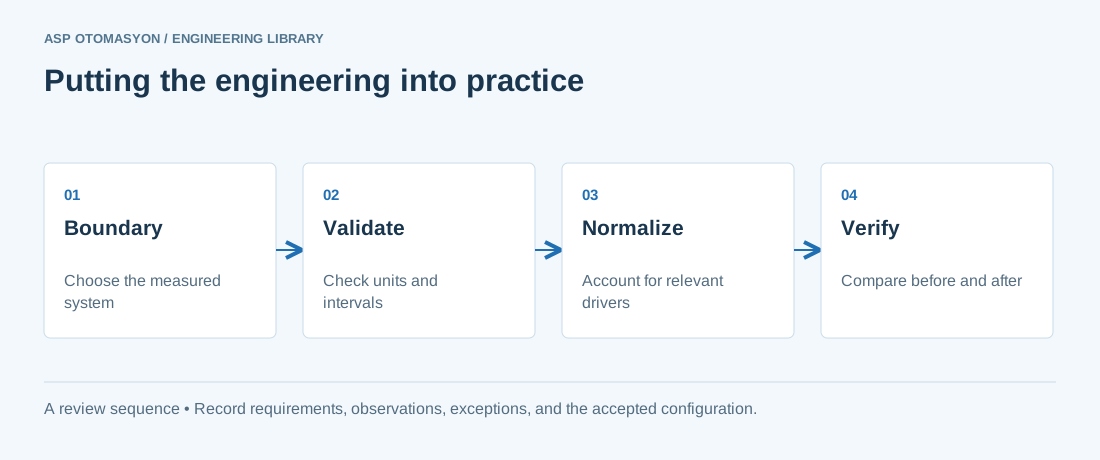
- Define the measurement boundary, meter ratios, units, time interval, and treatment of missing or reset readings.
- Capture production quantity, operating hours, and other relevant drivers alongside energy use.
- State the baseline and normalization assumptions when reporting a change; separate measured results from estimates.
Follow an ASP project guide to connect the fundamentals with implementation and acceptance.
Primary references and further reading
Use the original specifications and product documentation for implementation details. The examples in this guide are illustrative engineering scenarios, not published project results.