
pH is the most common analytical measurement in process plants — and the most misunderstood: a glass electrode is not a transmitter with a calibration curve, it is an electrochemical cell with a finite life, a temperature behavior, and failure modes that look like process changes. The same family (combined electrodes, reference systems) serves ORP (oxidation-reduction potential) measurement for disinfection control, neutralization, and redox processes. The engineering discipline is in the probe's chemistry: selection for the service, calibration against standards, and the maintenance rhythm that keeps the measurement true.
How pH Measurement Works
The pH electrode is a measuring half-cell (a glass membrane developing a potential proportional to the hydrogen ion activity) against a reference half-cell (typically Ag/AgCl in a KCl gel or liquid junction). The potential difference — measured by the transmitter through a high-impedance input — is converted to pH via the Nernst slope (59.16 mV/pH at 25 °C) and the electrode's zero point (pH 7 at 0 mV). Three practical consequences:
- Temperature matters — the slope changes with temperature; the transmitter compensates (with the temperature element in the same assembly), and the calibration must note the temperature.
- The junction is the weak point — the reference junction (where the KCl meets the process) must maintain a stable liquid junction potential; fouling, poisoning (sulfides, proteins), and plugging of the junction are the electrode's death — not the glass.
- High impedance needs cleanliness — the glass membrane is a high-impedance source (100 MΩ+): moisture, dirt, and cable contamination leak current and drift the reading; the connector and cable are part of the measurement.
Selection for the Service
- Process chemistry — low-ionic-strength water (pure water) needs special low-resistance electrodes; aggressive chemicals need the right glass types (low-temperature, high-temperature, fluoride-resistant); solvents and coatings need gel or solid references with the right junction material.
- Temperature and pressure — the electrode's rating must cover the process conditions; steam-sterilizable electrodes for hygienic services, high-pressure versions for pipelines.
- Mounting — immersion, flow-through (retractable), or insertion; the retractable (ball-valve) assembly allows probe exchange without process shutdown — the standard for continuous processes.
- ORP specifics — the ORP electrode is a noble-metal measuring element (platinum or gold) with the same reference system; the metal choice and the cleaning need follow the service (platinum fouling in some services, gold for others).
Calibration: The Discipline
- Buffer solutions — calibrate with fresh, unexpired buffers (pH 4, 7, 10) at the process temperature; the buffer's own temperature correction is applied (the buffer label has the table).
- Two-point calibration — span and zero: pH 7 plus a buffer near the operating point (the point closest to the process reads best); the slope should be 95–105% of theoretical — outside that, the electrode is failing, not the calibration.
- Frequency — the calibration interval is established per service: weekly for harsh services, monthly for benign ones; the trend of the calibration points (slope decay, zero drift) sets the electrode replacement date before the reading becomes wrong.
- Documentation — calibration records per probe (slope, offset, date, operator) are the evidence for the measurement's reliability — and the input to the probe replacement forecast (see the calibration article for the general discipline).
- ORP calibration — ORP uses a single standard solution (e.g., the 220 mV or 475 mV quinhydrone/ferrous solutions) and is typically verified, not "calibrated" per se — the probe's offset is checked and cleaned; the verification record is the control.
Maintenance Rhythm
- Cleaning — the probe is cleaned on a schedule matched to the fouling: chemical cleaning (the right solvent for the deposit), never abrasives on the glass; automatic cleaners (ultrasonic, spray) for the worst services.
- Electrolyte and junction care — gel references are maintenance-free until death; liquid junctions are topped up and the junction cleaned; the reference is the probe's lifetime component.
- Replacement planning — pH probes are consumables with a service life (months to a year typical); the plant stocks spares per loop and replaces on the trend (slope decay), not on failure — a failed pH probe in a neutralization loop is a process incident.
- Storage — probes are stored in the storage solution (KCl), never dry; a dried-out electrode is dead (a common spare-parts tragedy).
Diagnostics in the Transmitter
Modern pH transmitters monitor the sensor's health: glass impedance (rises with age and damage), reference impedance (rises with junction fouling), and the raw mV — the trends tell the maintenance story before the process does. The transmitter's diagnostics are wired into the control system (HART or fieldbus — see the HART article) so the maintenance planner sees the probe's condition remotely; the loop's alarm management then separates "process out of spec" from "sensor dying."
Summary
pH and ORP measurement is probe chemistry operated with discipline: select the electrode for the service (chemistry, temperature, mounting), calibrate against fresh buffers at the process temperature with slope monitoring, clean and maintain on a schedule matched to the fouling, and replace on the trend — not on failure. The probe is a consumable with a personality; treat it as the loop's most maintenance-intensive instrument and it will be the loop's most reliable one.
Apply this to your project
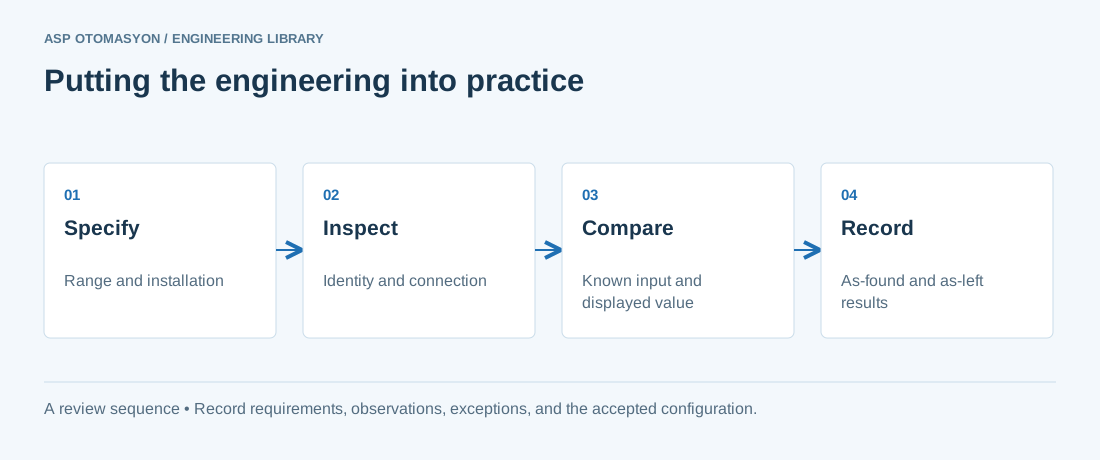
- Confirm the instrument tag, range, engineering unit, process connection, and environmental suitability against approved documents.
- Check the complete measurement chain, including sensor configuration, channel scaling, quality indication, and display units.
- Record reference equipment, uncertainty where relevant, test points, deviations, and the final configuration.
Follow an ASP project guide to connect the fundamentals with implementation and acceptance.
Primary references and further reading
Use the original specifications and product documentation for implementation details. The examples in this guide are illustrative engineering scenarios, not published project results.