
Compressed air is often called the fourth utility of industry — and the most expensive one. Typical plants waste 20–30% of their compressed air energy through leaks, inappropriate pressure, and poor control. Because the energy cost of generating compressed air dwarfs the equipment cost over its life (a 10-year energy bill can be several times the purchase price), improving the air system is one of the highest-return energy projects available. This article covers how compressed air systems waste energy and how to fix them systematically.
Why Compressed Air Is Expensive
Compressing air is inherently inefficient: roughly 90% of the electrical energy input to a compressor is converted to heat and lost, leaving only about 10% as useful pneumatic energy at the point of use. That makes every unit of wasted air — leaks, artificial demand, oversized supply — expensive in real terms. Two rules of thumb widely used by energy engineers:
- Reducing system pressure by 1 bar typically saves about 7% of compressor energy.
- One 3 mm leak at 7 bar can waste on the order of 1.5–2 kW of compressor power continuously (the exact figure depends on system pressure and compressor efficiency).
These are planning estimates, not guarantees — measure your own system to get real numbers.
Where the Waste Goes
1. Leaks (the biggest single loss)
Leaks are present in every system — fittings, hoses, quick couplings, regulators, and worn equipment. They cause the compressor to run longer, add load, and create pressure drops for everyone downstream. Detection:
- Ultrasonic leak detectors (audible during quiet periods or at night)
- Soap-and-water testing of suspected joints
- Compressor run-time analysis: if the compressor runs heavily during production shutdown, leaks dominate
2. Pressure set too high
Systems are often operated at higher pressure than needed to compensate for leaks and drops. Higher pressure increases leak flow and energy use across the whole system. Lower the header pressure in steps (e.g., 0.2–0.5 bar at a time) and verify the lowest pressure any user truly needs.
3. Artificial demand
Open blow-offs, continuous drains, and inappropriate use (e.g., using compressed air for cooling or cleaning where a blower would do) create "artificial demand" — consumption that serves no real purpose. Audit end uses and eliminate or replace them.
4. Poor control and part-load operation
Compressors running at part load waste energy. Modern controls sequence multiple compressors so that as few as possible run loaded. Variable-speed (VSD) compressors track demand efficiently in variable-load plants; fixed-speed units should be sequenced, not all run at once.
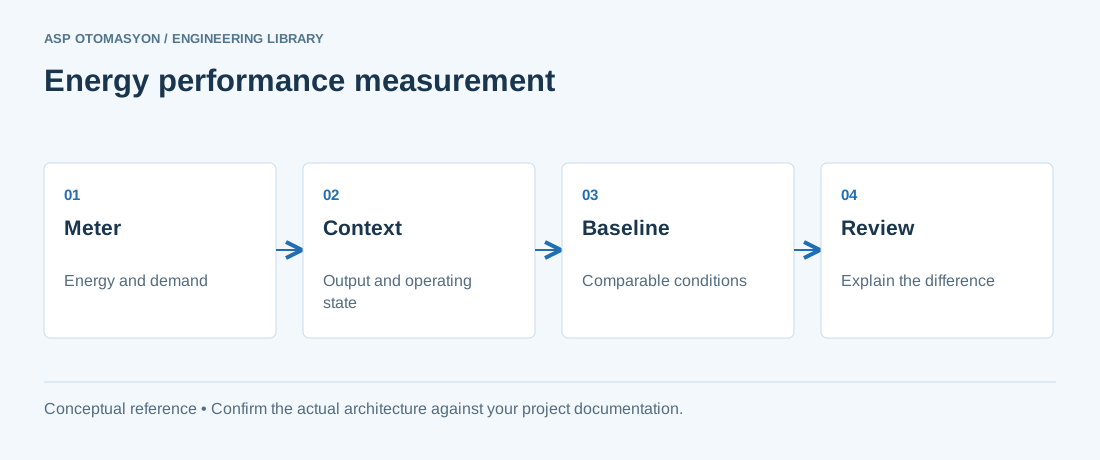
Measurement First
Optimize with data, not guesses:
- Flow metering: install a flow meter at the compressor room and (ideally) on major headers to quantify consumption and trends.
- Pressure logging: log header pressure at the compressors and at the furthest/worst points of use for a week.
- Power metering: measure compressor electrical power (or run-time with known power curves) to compute specific energy (kWh per m³).
- Leak quantification: measure flow during a shutdown with no demand — the remaining flow is largely leaks.
With this baseline, the improvement projects can be prioritized by measured impact.
Improvement Measures
| Measure | Typical saving potential | Effort |
|---|---|---|
| Leak repair program (recurring) | 10–30% of system energy | Low effort, needs regular repetition |
| Pressure reduction | ~7% per bar reduced | Low, verify user requirements |
| Eliminate artificial demand | Varies, often large | Medium, process change |
| Sequencing / VSD compressors | 10–25% in variable-load plants | Medium–high, capital |
| Proper drying and filtration | Reduces pressure loss and maintenance | Medium |
| Intake quality (cool, clean air) | 1–2% per 3 °C intake reduction | Low |
| Heat recovery from compressors | Recovers 50–90% of input as useful heat | Medium, needs a heat use |
Operational Practices That Keep It Fixed
- Scheduled leak surveys: leaks reappear; survey quarterly and fix as part of routine maintenance.
- Pressure governance: make the header pressure target a controlled parameter with an owner, not a knob anyone can turn.
- Shutdown discipline: isolate sections of the network during shutdowns (block valves) so leaks in idle areas do not load the system.
- Drain maintenance: replace timer-based drains with level-sensing (zero-loss) drains to avoid continuous air loss.
- Training: operators should know what compressed air costs and how to report leaks.
Summary
Compressed air optimization is a measurement-led process: quantify leaks, pressure, and consumption; fix leaks and artificial demand; lower pressure to the real requirement; and control the compressors to match demand. The savings are among the most reliable in industrial energy management, and the discipline (metering, leak surveys, pressure governance) compounds year after year.
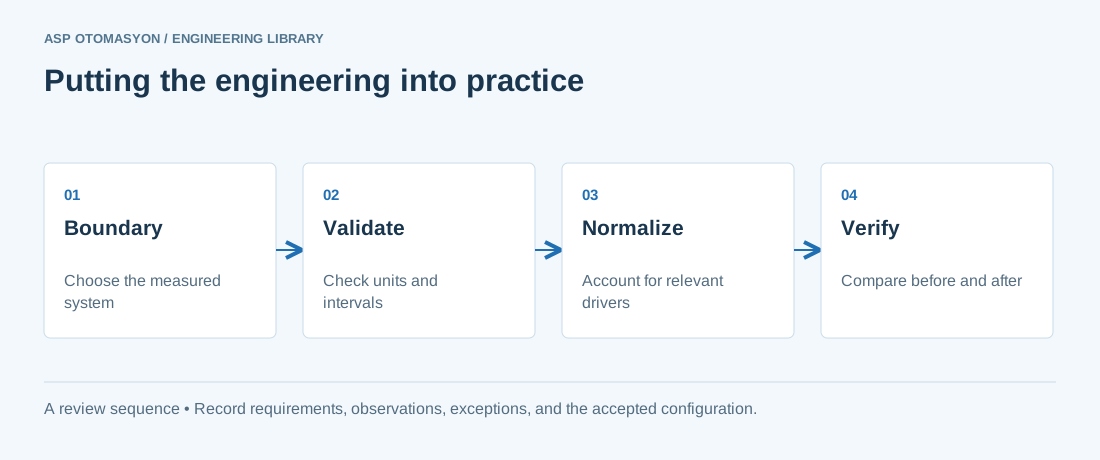
Apply this to your project
- Define the measurement boundary, meter ratios, units, time interval, and treatment of missing or reset readings.
- Capture production quantity, operating hours, and other relevant drivers alongside energy use.
- State the baseline and normalization assumptions when reporting a change; separate measured results from estimates.
Follow an ASP project guide to connect the fundamentals with implementation and acceptance.
Primary references and further reading
Use the original specifications and product documentation for implementation details. The examples in this guide are illustrative engineering scenarios, not published project results.