
Pharmaceutical manufacturing is automation's most demanding domain: the product is invisible, the process is validated, and every batch carries regulatory consequences. Automation in pharma must serve two masters at once — process control and regulatory compliance (GMP, 21 CFR Part 11 / EU Annex 11, and the validation lifecycle) — while the industry's own initiative, Process Analytical Technology (PAT), pushes toward measuring quality in real time instead of testing it after the batch. This article covers how automation is engineered in this environment.
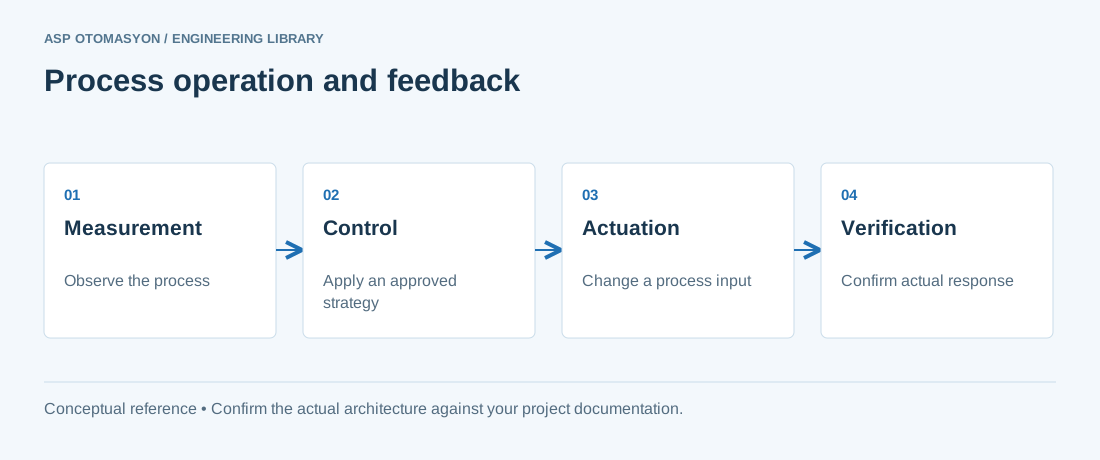
The Regulatory Frame
- GMP (Good Manufacturing Practice) — the quality system for production: defined processes, documented evidence, and control of changes. Every automated system is part of the GMP evidence chain.
- 21 CFR Part 11 / EU Annex 11 — the rules for electronic records and signatures: audit trails, access control, and validated systems. Automation systems generate the records; the records must be trustworthy by design (see the Quality 4.0 article for ALCOA+).
- Validation lifecycle (GAMP-style) — computerized systems are validated: User Requirements Specification (URS) → Functional/Design Specification → IQ/OQ/PQ (Installation, Operational, Performance Qualification) → ongoing change control. The automation engineer writes and executes much of this evidence.
The practical consequence: every software change is a change-controlled, re-qualified event; every alarm and audit log is evidence; and the system's design must make the records complete and unalterable.
Automation Architecture in Pharma
Pharma plants standardize on validated platforms:
- Batch control — ISA-88-based batch systems (see the batch control article) with recipe management, electronic batch records (EBR), and full auditability; the batch record is the product's autobiography.
- Data integrity by design — historians and MES with tamper-evident records, defined time sources, and review workflows; the data path from sensor to report is designed to be provable.
- Segregation and containment — cleanroom control (air handling, pressure cascades, monitoring), containment for potent compounds, and the environmental monitoring (EM) data feeding the quality system.
- Utilities as critical systems — purified water, WFI, clean steam, and HVAC are GMP-critical; their automation and monitoring are validated systems in their own right (see the pharmaceutical water systems article).
PAT: Quality as a Process Variable
PAT (per FDA guidance) is the system for designing, analyzing, and controlling manufacturing through timely measurement of critical quality and performance attributes. In automation terms, PAT means:
- In-line/on-line analytics — NIR, Raman, and other spectroscopies measuring blend uniformity, moisture, or content in real time; the analyzer becomes a process instrument connected to the control system (OPC UA integration is standard).
- Multivariate control — the analyzer's multivariate model (chemometrics) predicts the quality attribute; the prediction feeds control (adjusting the process) instead of a lab result hours later.
- Design space and real-time release — the validated operating envelope (design space per ICH Q8/Q9/Q10) allows operating within the space and, ultimately, real-time release testing (RTRT) — quality decisions from process data instead of end-testing.
PAT is an automation-adjacent discipline: the models, the analyzer systems, and the control integration are engineered like any analyzer project — but with the validation and change-control weight of pharma.
Delivering Automation in a Validated World
- Write the URS as a contract — the automation requirements (functions, records, audit, alarm behavior, access) are specified before design; the vendor delivers against it and the validation verifies against it.
- Design for the evidence — every alarm, change, and operator action is recorded with user, time, and value; the audit trail is not optional and not an afterthought.
- Plan validation into the schedule — IQ/OQ/PQ takes real time (protocols, execution, deviations, re-testing); projects that discover validation at the end fail their own schedules.
- Manage changes formally — the change control process covers software, configuration, and hardware; a "quick fix" without the change record is a compliance finding later.
- Keep the automation team in the quality system — automation engineers speak both languages: control engineering and GMP; the plant's quality unit and automation group must have a defined interface (who approves what).
Summary
Pharmaceutical automation is process control with regulatory evidence as a first-class requirement: validated systems, audit trails by design, ISA-88 batch with electronic records, GMP-critical utilities, and PAT pulling quality into the control loop. The engineering discipline is the same as any automation — the difference is that every byte of the system is evidence, and the evidence is the product's license to exist. Design for it, validate it, and change it formally.
Apply this to your project
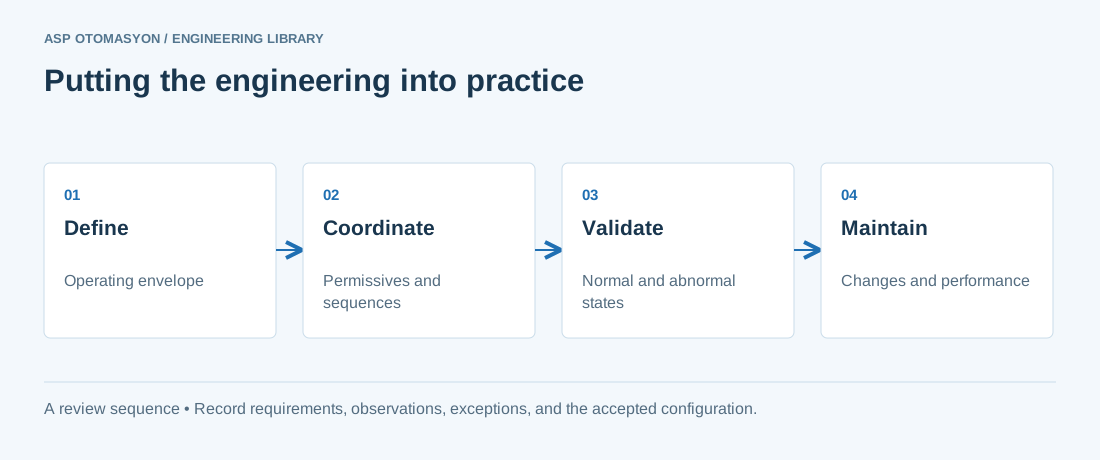
- Record process boundaries, required operating states, and interactions with independent protective systems.
- Check instrument quality, control authority, permissives, and operator responsibilities during state changes.
- Agree how tests, deviations, and configuration changes will be recorded within the facility's engineering procedures.
Follow an ASP project guide to connect the fundamentals with implementation and acceptance.
Primary references and further reading
Use the original specifications and product documentation for implementation details. The examples in this guide are illustrative engineering scenarios, not published project results.