
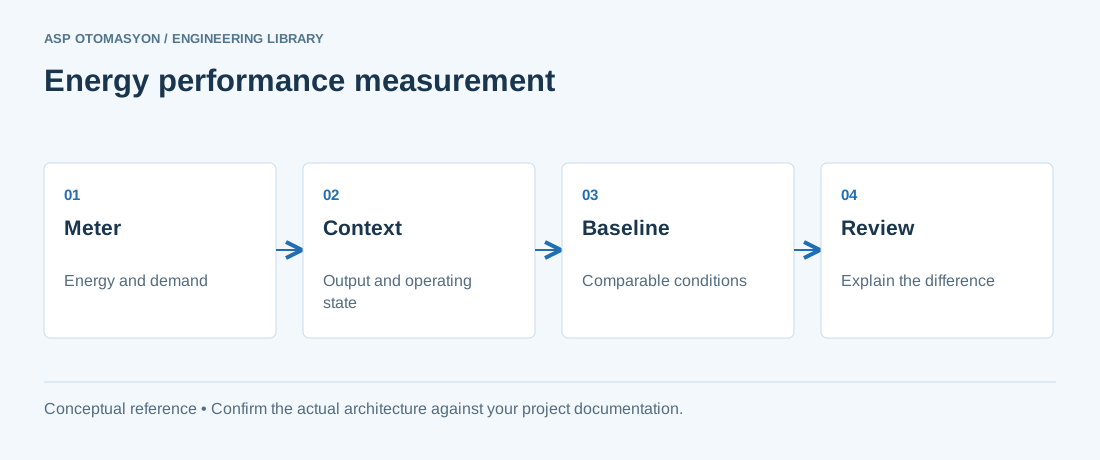
An energy audit is the systematic examination of how a facility uses energy, with the purpose of identifying where it is wasted and what efficiency measures are worth implementing. For industrial plants, where energy is typically 15–40% of operating cost, the audit is the foundation of every serious efficiency program — the map before the investment. ISO 50002 ("Energy audits — Requirements with guidance for use") standardizes the audit process, and its sibling ISO 50006 defines how to measure performance (see the EnPI article). This article explains what an industrial energy audit actually is and how to run one.
The ISO 50002 Process
ISO 50002 defines an audit as a structured sequence:
- Planning — scope (whole site, a plant, a system), objectives, boundaries, and the audit team; the client's energy data and utility bills are the starting evidence.
- Data collection — energy consumption by utility (electricity, gas, steam, fuel, water) and by consumer; operating schedules; production output; and the equipment inventory with ratings and run times.
- Site walkthrough and measurement — confirming the data on the ground: load measurements (clamp meters, loggers), equipment operation, and the "always on" loads that nobody notices.
- Analysis — building the energy balance: where does each kilowatt go? Consumption is allocated to systems (compressed air, HVAC, motors, process, lighting), and each system's efficiency is assessed against its peers and best practice.
- Identification of opportunities — energy performance improvement measures (EPIMs): operational (turn it off), maintenance (fix the leak), retrofits (replace the motor), and design changes (heat recovery).
- Reporting — the audit report: findings, prioritized measures with cost, savings, and payback, and the assumptions behind each number.
The standard requires the audit to be documented, reproducible, and objective: another auditor reviewing the same data should reach the same conclusions — the discipline that separates audits from opinions.
The Energy Balance: Where the Power Goes
The audit's core artifact is the energy balance — for each utility, the total input distributed to consumers:
- Electricity — motors and drives (typically 50–70% of industrial electricity), compressed air, HVAC, lighting, process heating (electric), IT/controls.
- Thermal — boilers/steam (with distribution losses), direct-fired heaters, and the waste heat leaving with flue gas, condensate, and cooling water.
- Fuel — the combustion efficiency story: excess air, combustion temperature, and heat recovery.
The balance is checked against the utility bills (sum of consumers = billed energy within measurement tolerance); a balance that does not close means the audit's data is incomplete — and the missing share is usually a hidden consumer (leaks, standby loads, uncontrolled heating).
What Audits Find (The Usual Suspects)
Industrial audits repeatedly surface the same opportunity classes, in rough order of frequency:
| Opportunity | Typical finding |
|---|---|
| Compressed air leaks and pressure | 20–30% of compressor output lost to leaks; system pressure higher than needed; compressors running when lines are idle. |
| Motors running unloaded or oversized | Motors at partial load with poor efficiency; no VFD where flow varies. |
| HVAC and ventilation | Over-ventilation, simultaneous heating and cooling, no setback schedules, old chillers. |
| Lighting | Outdated lamps, lights on in unoccupied areas, no daylight or presence control. |
| Steam and condensate | Failed traps, no condensate recovery, high blowdown, insulation missing. |
| Standby and off-hours loads | Equipment left running outside production hours; the biggest "invisible" waste. |
Audit Types: Walkthrough, Mini, Investment-Grade
Audits scale with purpose. A walkthrough audit (hours–days) identifies the obvious opportunities with rough numbers — enough to prioritize. A mini/energy survey (days–weeks) adds measurement and firmer economics — the level most plants should run first. An investment-grade audit (weeks–months) adds detailed engineering, sub-metering, and financial-grade projections — the prerequisite for major capital decisions. The error to avoid: running an investment-grade audit before the walkthrough priorities are known, or skipping measurement entirely — the numbers in the report are the audit's whole value.
Making the Audit Pay
- Measure, don't estimate — key consumers get real load data (loggers, sub-meters, utility interval data); a savings claim based on a nameplate rating is a guess with a payback attached.
- Operational measures first — behavior and scheduling measures (turn it off, fix the leak, lower the pressure) have the best payback and no capital risk; they are also the ones that need an owner and follow-through.
- Verify after implementation — the audit's savings are validated with metered before/after data (IPMVP-style); the audit loop closes with verification, which also builds the case for the next audit.
- Repeat — audits are periodic (ISO 50001 requires review on a cycle); the second audit starts from the first one's verification data and finds the next layer.
Summary
An ISO 50002-style energy audit is a structured, evidence-based examination: plan, collect data, measure on site, build the energy balance, identify measures, and report with real economics. Match the audit depth to the decision, measure rather than estimate, fix the operational finds first, verify the savings, and repeat. The audit is not a report — it is the plant's energy intelligence, and like all intelligence, it is only useful when it is used.
Apply this to your project
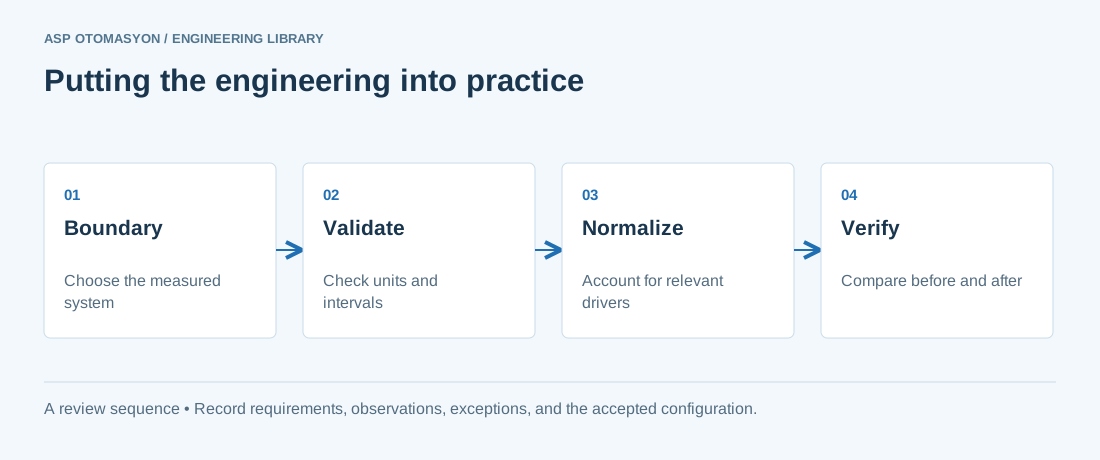
- Define the measurement boundary, meter ratios, units, time interval, and treatment of missing or reset readings.
- Capture production quantity, operating hours, and other relevant drivers alongside energy use.
- State the baseline and normalization assumptions when reporting a change; separate measured results from estimates.
Follow an ASP project guide to connect the fundamentals with implementation and acceptance.
Primary references and further reading
Use the original specifications and product documentation for implementation details. The examples in this guide are illustrative engineering scenarios, not published project results.