
Steam remains the workhorse of industrial thermal energy: process heating, sterilization, tracing, and power. A typical steam system wastes 20–30% of its fuel — and the waste is invisible: steam escapes as vapor, condensate drains to the sewer, traps fail silently, and insulation disappears behind pipe racks. Steam efficiency is a maintenance and measurement discipline: the energy is in the water, and every kilogram of steam that does not return as condensate carries its heat away forever.
The Steam Balance
Efficiency analysis starts with the balance: fuel in, steam generated, condensate returned, makeup water added:
- Boiler efficiency — 80–85% is typical for a well-run industrial boiler (on lower heating value); losses are flue gas heat (the biggest), radiation, blowdown, and unburned fuel. Flue gas temperature is the key indicator: every 20 °C of excess flue temperature is roughly 1% of efficiency lost.
- Distribution losses — uninsulated or damaged piping, leaking flanges and valves, and steam vents.
- End-use losses — processes exhausting flash steam, open tanks, and equipment running at higher pressure than needed.
- Condensate losses — condensate drained to sewer instead of returned: each ton of condensate thrown away carries ~10% of the boiler's fuel with it (the sensible heat), plus the cost of the treated water.
The Efficiency Measures
| Measure | Typical saving | Notes |
|---|---|---|
| Condensate recovery | 10–20% of fuel | The single biggest steam-system saving; return hot condensate (60–90 °C) to the boiler feedwater; flash steam recovery adds more. |
| Steam trap management | 5–15% of steam | A failed-open trap blows live steam continuously; failed-closed traps flood processes. A trap survey (ultrasonic/thermal) with repair program pays back in weeks. |
| Insulation | 5–15% of distribution loss | Insulate all bare steam and condensate lines; repair damaged insulation — the most common visible waste. |
| Flue gas heat recovery (economizer) | 3–6% of boiler fuel | Preheat feedwater or combustion air with flue heat; also condensing economizers where sulfur allows. |
| Blowdown optimization | 1–3% of boiler fuel | Continuous blowdown with heat recovery, controlled by conductivity instead of manual schedules. |
| Pressure reduction | Proportional to the load profile | Lower steam pressure where the process allows (check the safety requirements); leaks and radiation scale with pressure. |
| Leak repair | Depends on the leak count | A 3 mm steam leak at 7 bar costs roughly 3–4 tons of steam per month — the arithmetic justifies the walk-through. |
The Steam Trap Program
Steam traps deserve a program of their own: they are the most numerous, most neglected efficiency device in the plant. The program: an inventory of every trap (tag, type, size, service), a survey schedule (ultrasonic testing annually, more often for critical services), a failure classification (blow-through, closed, flooding) with repair priority, and the KPI: trap failure rate trending down and repair cycle time. Many plants find 20–30% of traps failed on the first survey — and each failed trap is a continuous leak until fixed.
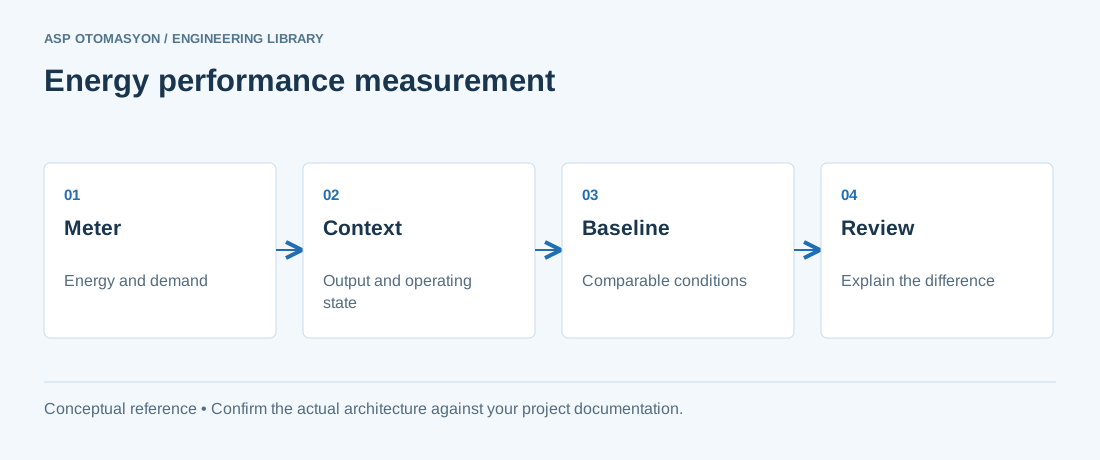
Measurement: The Steam Metering Question
You cannot manage what you do not measure: steam sub-metering (flow meters on major consumers or per plant area) turns steam efficiency from a belief into a number. The measurement strategy: total steam from the boiler house, condensate return measured at the receiver, and key consumers metered (the largest or the most variable). The energy management system (see the EMS article) then tracks steam per unit of production, per area, and per season — and the anomalies (a trap failed open, a process vent left running) become visible as consumption jumps.
Operational Discipline
- Water treatment is energy efficiency: scale on heat transfer surfaces costs 2–5% boiler efficiency; a blown-down-to-safety boiler is an efficiency incident.
- Startup and standby: steam systems should not idle at full pressure all night; the startup strategy (and its safety review) saves the standby losses.
- Flash steam recovery at condensate collection points (high-pressure condensate to low-pressure users) captures 10–15% of the condensate's heat that would otherwise flash away.
- The monthly review: steam per ton of product, makeup water rate (a rising makeup rate is a condensate loss alarm), flue gas temperature trend, and the trap survey status.
Summary
Steam efficiency is a system discipline: condensate returned, traps surveyed and repaired, lines insulated, flue heat recovered, blowdown controlled, and every consumer metered. The measures are proven and the paybacks are short; what they require is sustained attention — the survey, the repair loop, and the monthly numbers. Steam is the most expensive utility per ton; it deserves the most careful accounting.
Apply this to your project
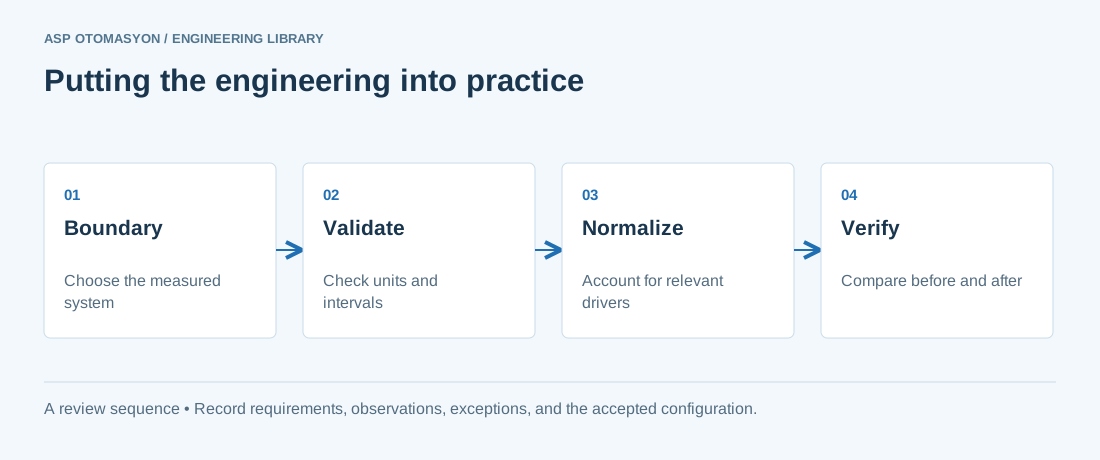
- Define the measurement boundary, meter ratios, units, time interval, and treatment of missing or reset readings.
- Capture production quantity, operating hours, and other relevant drivers alongside energy use.
- State the baseline and normalization assumptions when reporting a change; separate measured results from estimates.
Follow an ASP project guide to connect the fundamentals with implementation and acceptance.
Primary references and further reading
Use the original specifications and product documentation for implementation details. The examples in this guide are illustrative engineering scenarios, not published project results.