
A SCADA acceptance test should show that operators can recognize plant state, issue permitted commands, respond to abnormal conditions, and recover from interruptions. Visual approval is one input. Communications, data quality, authorization, alarms, historical records, and restart behavior also need explicit acceptance evidence.
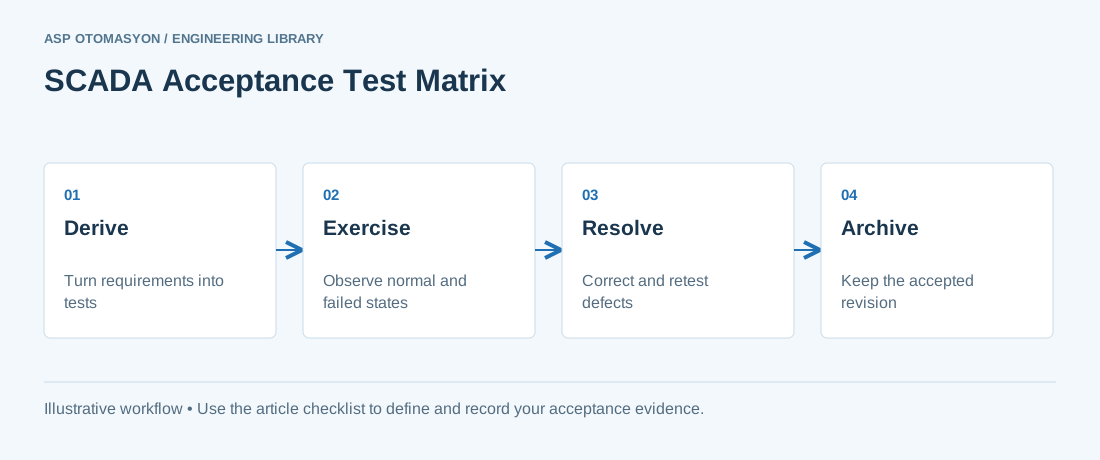
Design the requirement before the configuration
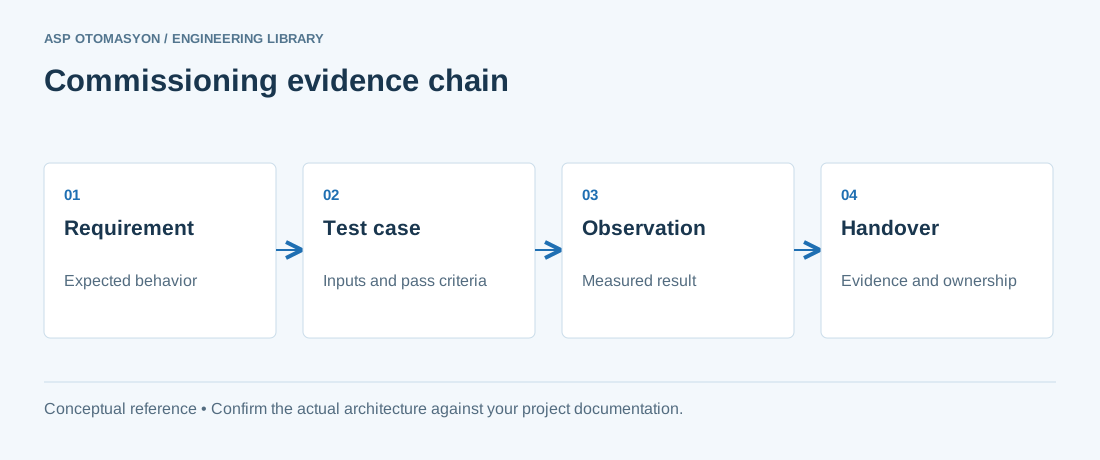
Build the matrix from the operating requirements and assign a witness for each area. For every test, record preconditions, action, expected response, actual result, configuration revision, and exception handling. Test representative equipment classes and known special cases. A successful point test should not be generalized to every interface when drivers, security settings, or scaling rules differ. Keep commissioning simulations distinguishable from real process values.
Worked scenario
For an illustrative pump faceplate, verify stopped, running, unavailable, and communication-failed states; permitted command sources; interlock indications; and alarm navigation. Perform command testing only under approved site conditions. A graphic that changes color after a simulated bit flip has not proved the complete command path or the physical equipment response.
What to verify
| Check | Evidence to record |
|---|---|
| Display | Correct unit, range, state, and bad-quality presentation |
| Control | Role, command path, permissive, and feedback behavior |
| Records | Alarm time, acknowledgment, history, and export consistency |
| Recovery | Restart, reconnect, failover, and restoration evidence |
Acceptance and handover
Include operator participation and a defect closeout process. A retest must identify the changed configuration, not merely change a status field to passed. Archive the accepted project alongside the results so that a future restore can be compared with the tested baseline.
Continue the engineering work
Use the related technical library for deeper background, or follow an ASP project guide to plan the implementation sequence.
Primary references and further reading
Use the original specifications and product documentation for implementation details. The examples in this guide are illustrative engineering scenarios, not published project results.