
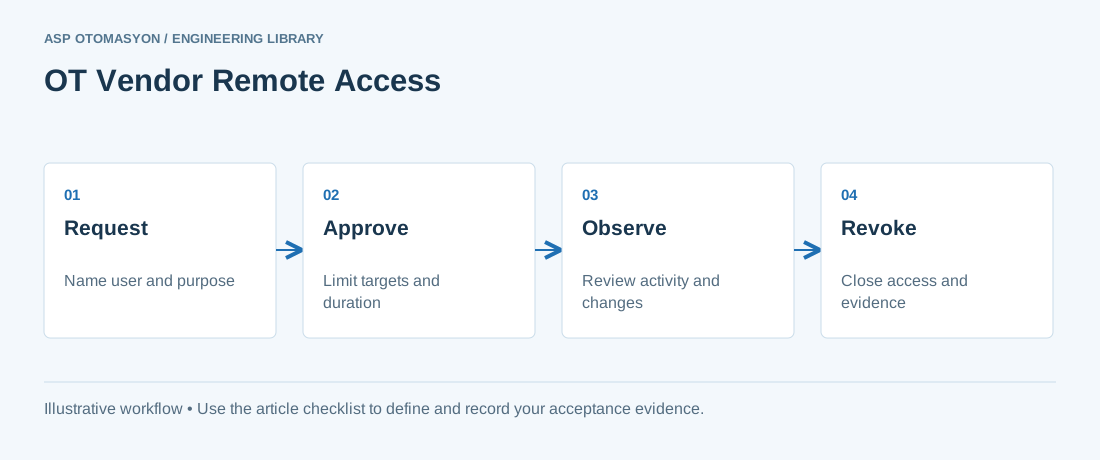
Vendor access to an industrial system should be an approved activity with a named person, defined target, limited duration, and visible outcome. A permanent tunnel shared by several suppliers makes it difficult to know who changed what or whether access is still needed.
Design the requirement before the configuration
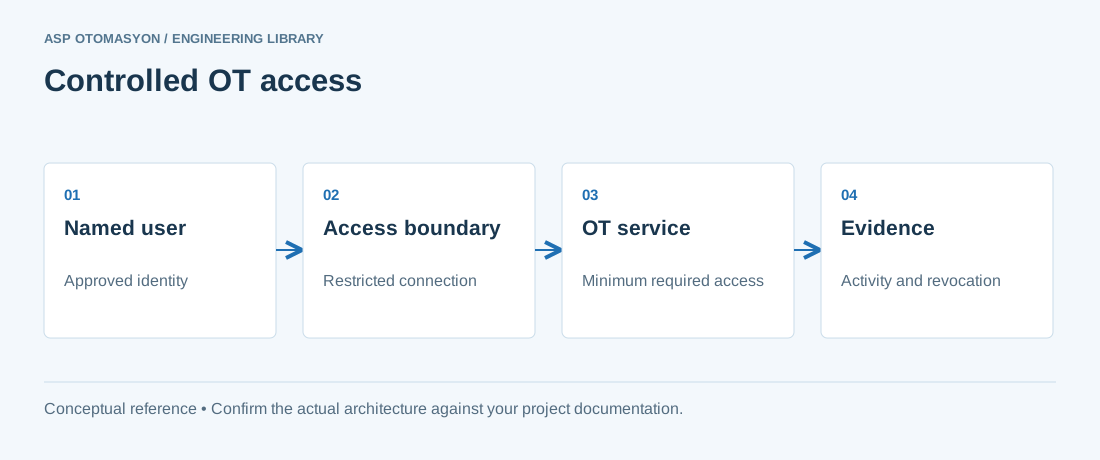
Record the purpose, requested systems, required privileges, expected tools, planned changes, and site contact before enabling access. Use the organization’s approved remote access architecture and authentication controls. Authorize only the necessary destination and time window. Agree how sessions are supervised or recorded, how emergency revocation works, and who can approve a scope change. Troubleshooting permission should not silently become permission to download new control logic.
Worked scenario
For an illustrative two-hour diagnostic session, approve read-only access to a named engineering workstation and require a second decision before any configuration write. If the vendor needs another host, stop and amend the request. Afterward, revoke the session and confirm that temporary accounts, files, or communication exceptions have been handled according to the change record.
What to verify
| Check | Evidence to record |
|---|---|
| Request | Named engineer, employer, target, purpose, and time window |
| Approve | OT owner confirms operational impact and least privilege |
| Observe | Capture activity and deviations using approved monitoring |
| Close | Revoke access, review changes, and archive the work record |
Acceptance and handover
Test access expiration and emergency revocation before relying on them. Periodically reconcile approved vendor relationships against enabled accounts and network paths. Treat authentication, network reachability, and application authorization as separate checks; passing one does not prove the others.
Continue the engineering work
Use the related technical library for deeper background, or follow an ASP project guide to plan the implementation sequence.
Primary references and further reading
Use the original specifications and product documentation for implementation details. The examples in this guide are illustrative engineering scenarios, not published project results.