
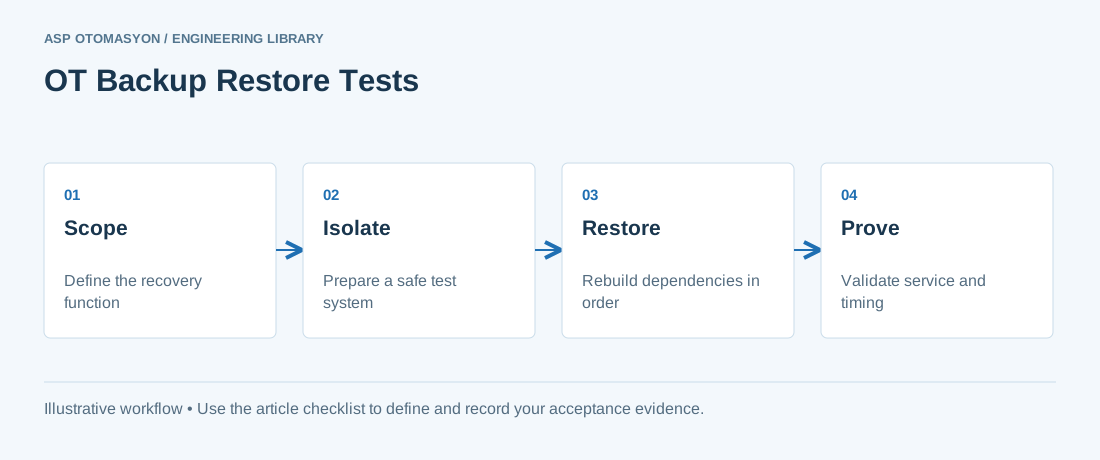
A backup is a recovery input, not evidence that recovery will work. A restore test checks whether the organization can rebuild the required function within agreed time and data-loss limits. Include controller projects, SCADA servers, historians, network configurations, certificates, licenses, and the dependencies between them.
Design the requirement before the configuration
Start with the business function and its recovery objective. Define which configuration or historical data may be lost and how long the function can be unavailable. Build an isolated test environment that cannot accidentally command the production plant. Record restore order, required identities, installation media, hardware compatibility, and offline access to instructions. Keep recovery materials available when normal directory services or the corporate network are unavailable.
Worked scenario
An illustrative historian recovery restores a server image successfully but takes another four hours to retrieve encryption material and reconnect interfaces. Reporting only the image restore time understates the outage. Measure from the agreed recovery start to verified service readiness, including dependencies and validation. Reconcile a known set of historical records and confirm how any unavoidable data gap is marked.
What to verify
| Check | Evidence to record |
|---|---|
| Availability | Can authorized staff retrieve the backup and required keys? |
| Integrity | Does the archive validate and restore without unexplained errors? |
| Function | Do interfaces, alarms, history, and access controls operate? |
| Recovery time | Does the complete observed sequence meet the agreed objective? |
Acceptance and handover
Keep evidence of the backup revision, restore environment, observed times, checks, and unresolved gaps. Repeat after material system changes and at a frequency selected by the asset owner. Protect backup copies against compromise and accidental deletion independently of the live system.
Continue the engineering work
Use the related technical library for deeper background, or follow an ASP project guide to plan the implementation sequence.
Primary references and further reading
Use the original specifications and product documentation for implementation details. The examples in this guide are illustrative engineering scenarios, not published project results.