
ANSI/ISA-95 (commonly called ISA-95) is the international standard for developing an automated interface between enterprise systems and control systems. Published by the International Society of Automation and adopted as IEC 62264, ISA-95 provides a consistent framework for integrating manufacturing operations with business planning and logistics. For organizations pursuing digital transformation, ISA-95 is the foundational reference model that defines what information must flow between the plant floor and the enterprise.
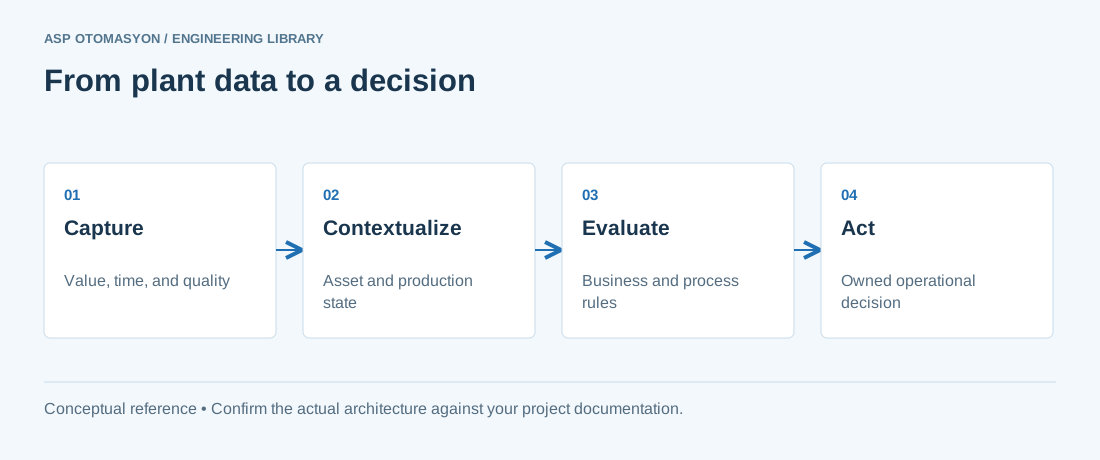
The Purdue Enterprise Reference Architecture
ISA-95 is built upon the Purdue model, which defines a hierarchical functional model of manufacturing operations. The model separates enterprise and control functions into distinct levels:
  Level 4 — Business Planning & Logistics
  ┌─────────────────────────────────────────┐
  │ ERP (Enterprise Resource Planning)       │
  │ Order processing, production scheduling, │
  │ shipping, material procurement           │
  └──────────────────┬──────────────────────┘
                     │ (business data)
  Level 3 — Manufacturing Operations Management
  ┌──────────────────┴──────────────────────┐
  │ MES (Manufacturing Execution System)     │
  │ Production tracking, quality management, │
  │ maintenance management, performance      │
  │ analysis, work dispatching               │
  └──────────────────┬──────────────────────┘
                     │ (production data)
  Level 2 — Supervisory Control
  ┌──────────────────┴──────────────────────┐
  │ SCADA, HMI, batch control, engineering   │
  │ workstations, alarm management          │
  └──────────────────┬──────────────────────┘
                     │ (supervisory data)
  Level 1 — Basic Control
  ┌──────────────────┴──────────────────────┐
  │ PLC, DCS, SIS, RTU, CNC controllers      │
  └──────────────────┬──────────────────────┘
                     │ (process data)
  Level 0 — Physical Process
  ┌──────────────────┴──────────────────────┐
  │ Sensors, actuators, motors, valves,      │
  │ field instruments                        │
  └─────────────────────────────────────────┘
ISA-95 Standard Parts
The ISA-95 standard is organized into multiple parts, each addressing a specific aspect of enterprise-control integration:
| Part | Title | Status | Focus |
|---|---|---|---|
| Part 1 | Models and Terminology | Published (IEC 62264-1) | Defines consistent terminology, hierarchy models, functional data flow, object models, and operations activity models. |
| Part 2 | Object Model Attributes | Published (IEC 62264-2) | Defines attributes for every object in Part 1. Used as the basis for information exchange and relational databases. |
| Part 3 | Models of Manufacturing Operations Management | Published (IEC 62264-3) | Focuses on Level 3 activities (MES layer). Defines production, quality, maintenance, and inventory operations. |
| Part 4 | Object Models and Attributes for MOM | Published (IEC 62264-4) | Defines object models for information exchange between MES activities. |
| Part 5 | Business-to-Manufacturing Transactions | Published (IEC 62264-5) | Defines transactions between enterprise and manufacturing systems. |
ISA-95 Object Models
ISA-95 Part 1 defines a set of object models that categorize the elements of manufacturing operations:
- Personnel Model — Qualified personnel, certifications, and roles.
- Equipment Model — Physical and logical equipment hierarchy (enterprise, site, area, process cell, unit, equipment module, control module).
- Material Model — Material classes, material lots, material definitions, and material sub-lots.
- Process Segment Model — Segments of the manufacturing process that define what equipment and materials are used.
- Production Schedule and Performance — Production requests, production rules, and actual performance data.
- Operations Definition and Schedule — Detailed manufacturing operations and their sequencing.
B2MML — Business To Manufacturing Markup Language
B2MML is an XML implementation of the ISA-95 standard, maintained by the Manufacturing Enterprise Solutions Association (MESA). It provides a standardized schema for exchanging ISA-95-defined information between systems such as ERP, MES, and control systems. B2MML enables:
- Standardized data exchange between SAP ERP and plant-floor systems.
- Interoperability between MES platforms from different vendors.
- Consistent object model representation across the enterprise.
- Reduced integration engineering effort through pre-defined schemas.
Practical Implementation
Implementing ISA-95 in an industrial environment typically involves:
- Define the equipment hierarchy — Map physical assets to the ISA-95 model (enterprise → site → area → process cell → unit).
- Identify information flows — Determine what data must move between each level (production schedules downward, production results upward).
- Select integration technology — OPC UA (with ISA-95 companion specifications), MQTT, REST APIs, or middleware platforms.
- Map object models — Define how material, equipment, and personnel data is structured and exchanged.
- Implement transactions — Configure production schedules, work orders, material consumption, and quality results exchange.
ASP OTOMASYON designs and implements ISA-95-aligned integration architectures for Turkish manufacturers, connecting plant-floor control systems with ERP and MES platforms using OPC UA and modern middleware solutions.
Apply this to your project
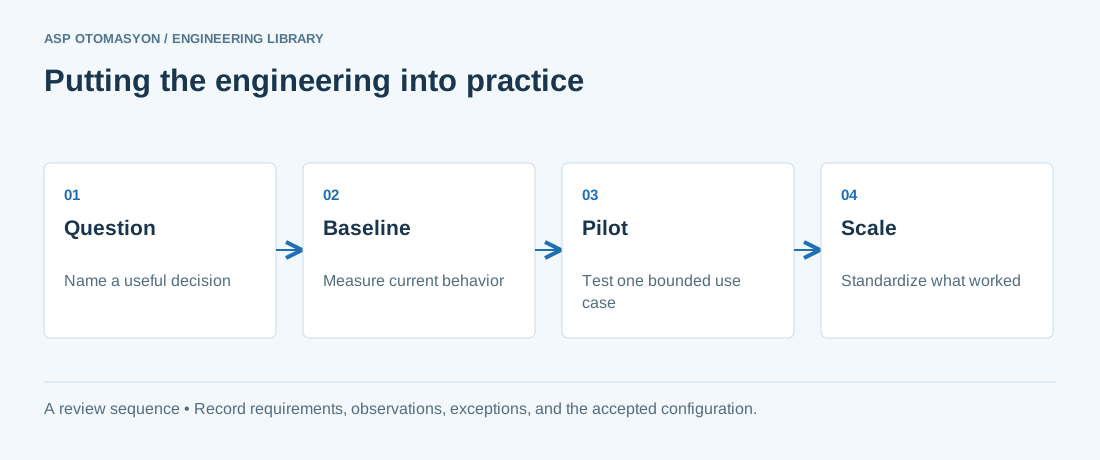
- Name the operational decision, its owner, and the evidence required to judge whether it improved.
- Document asset identifiers, units, timestamps, quality rules, and definitions shared between OT and business applications.
- Compare the pilot against a recorded baseline before extending it to other machines or sites.
Follow an ASP project guide to connect the fundamentals with implementation and acceptance.
Primary references and further reading
Use the original specifications and product documentation for implementation details. The examples in this guide are illustrative engineering scenarios, not published project results.