
A tag name is an identifier; a data contract explains what that identifier means and how it behaves. Agree both before connecting PLC, SCADA, historian, and MES systems. This prevents different consumers from interpreting the same temperature, counter, or machine state in incompatible ways.
Design the requirement before the configuration
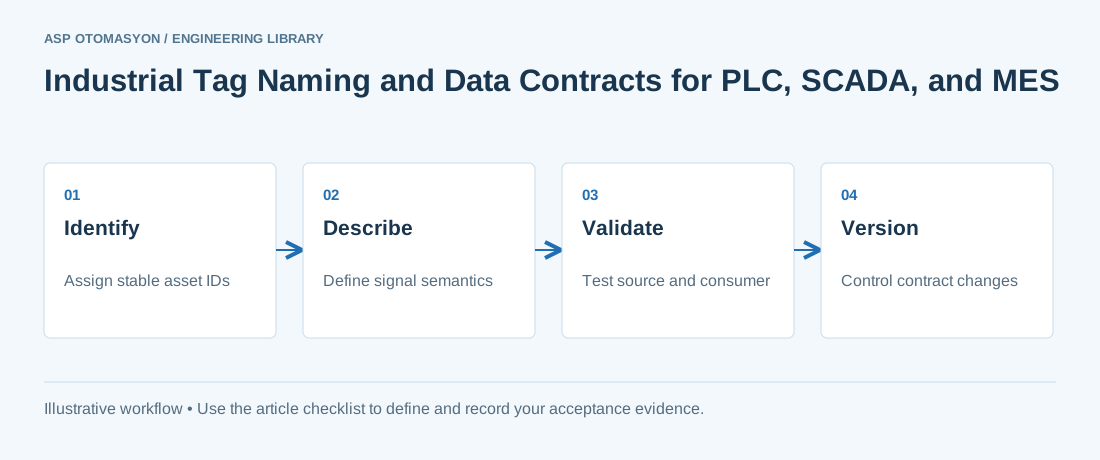
Use a stable asset identifier and a documented hierarchy that can survive a display-name change. Separate physical assets, functional locations, and production equipment when they have different lifecycles. For each signal, document its type, unit, scaling, quality rules, timestamp meaning, owner, and change process. Avoid packing every attribute into the name: a readable namespace plus metadata is easier to maintain than an acronym that nobody can decode. Explicitly distinguish instantaneous values, interval aggregates, cumulative counters, and commands.
Worked scenario
An illustrative contract for Plant01.Line02.Filler01.GoodCount might specify an unsigned cumulative counter, units of bottles, source timestamps in UTC, reset behavior at a production-order boundary, and quality inherited from the source connection. MES must not assume it is an interval total. Calculate deltas with reset detection and reconcile them against accepted production records before using the count in a performance report.
What to verify
| Check | Evidence to record |
|---|---|
| Identity | Stable asset ID, signal ID, and human-readable description |
| Semantics | Type, unit, range, quality, timestamp, and counter/reset behavior |
| Ownership | Responsible engineer and consuming systems |
| Change | Version, compatibility impact, migration, and retirement date |
Acceptance and handover
Validate a sample contract with the person who programs the source and the person who consumes the data. Test unit conversion, counter reset, missing values, and a renamed asset. Keep a machine-readable contract next to the integration configuration and review both together.
Continue the engineering work
Use the related technical library for deeper background, or follow an ASP project guide to plan the implementation sequence.
Primary references and further reading
Use the original specifications and product documentation for implementation details. The examples in this guide are illustrative engineering scenarios, not published project results.