
Historian storage settings decide which evidence survives for later analysis. Deadband and compression can reduce volume, but aggressive settings may hide short events, distort derived metrics, or make a reconstructed trend appear more certain than the observations support. Select settings by signal purpose and validate the exported data.
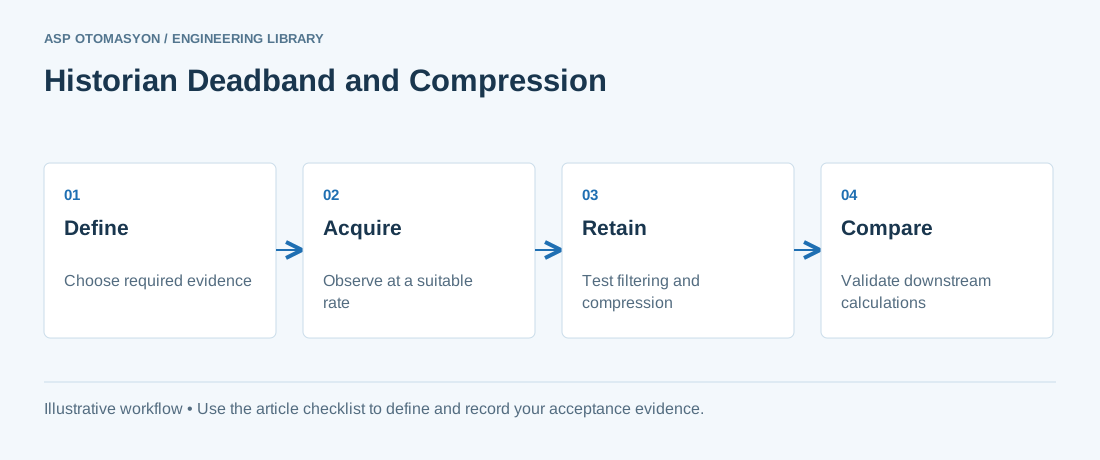
Design the requirement before the configuration
Separate acquisition rate, exception filtering, archive compression, and query interpolation. They act at different stages, and similarly named options can behave differently between products. A temperature used for a long-term energy balance may tolerate a different recording policy from a sequence event or batch-quality measurement. Document the smallest change and shortest event that consumers need to observe, then compare the proposed archive against a higher-resolution reference.
Worked scenario
Imagine a pressure signal with a brief excursion between otherwise stable values. A low-resolution acquisition schedule may miss it before compression is involved. A filter can also discard observed changes, while a chart may draw a smooth line between the retained points. Inspect raw archive records and quality states alongside the visual trend before concluding that the process was stable.
What to verify
| Check | Evidence to record |
|---|---|
| Acquisition | Can the source observe the event of interest? |
| Filtering | Which observed changes are intentionally discarded? |
| Compression | What error or time bounds does the product actually enforce? |
| Retrieval | Are values raw, interpolated, or aggregated? |
Acceptance and handover
Test steady values, ramps, steps, short excursions, and bad-quality intervals. Recalculate the consuming metric from both the reference and proposed archive. Record acceptable differences, units, and product settings. Revisit the policy when a new use case requires more detail than the old archive retained.
Continue the engineering work
Use the related technical library for deeper background, or follow an ASP project guide to plan the implementation sequence.
Primary references and further reading
Use the original specifications and product documentation for implementation details. The examples in this guide are illustrative engineering scenarios, not published project results.