
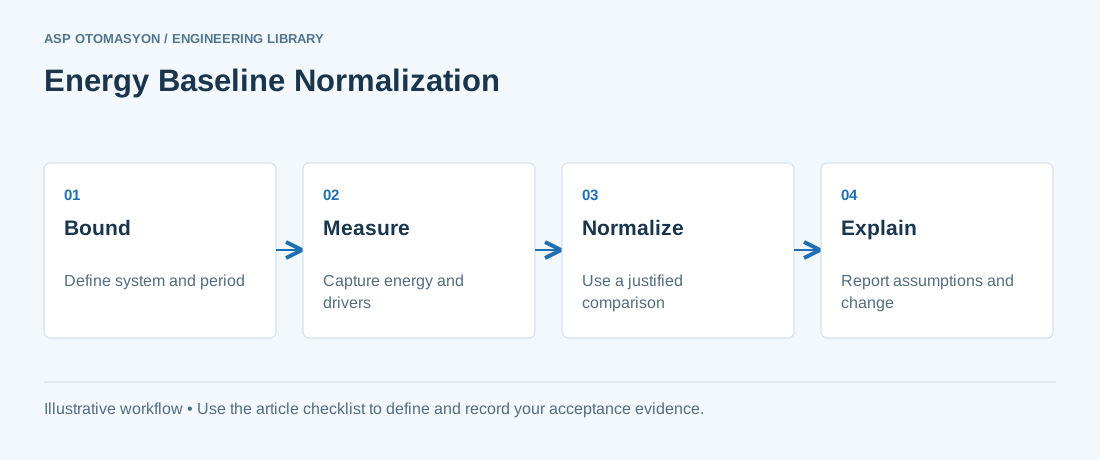
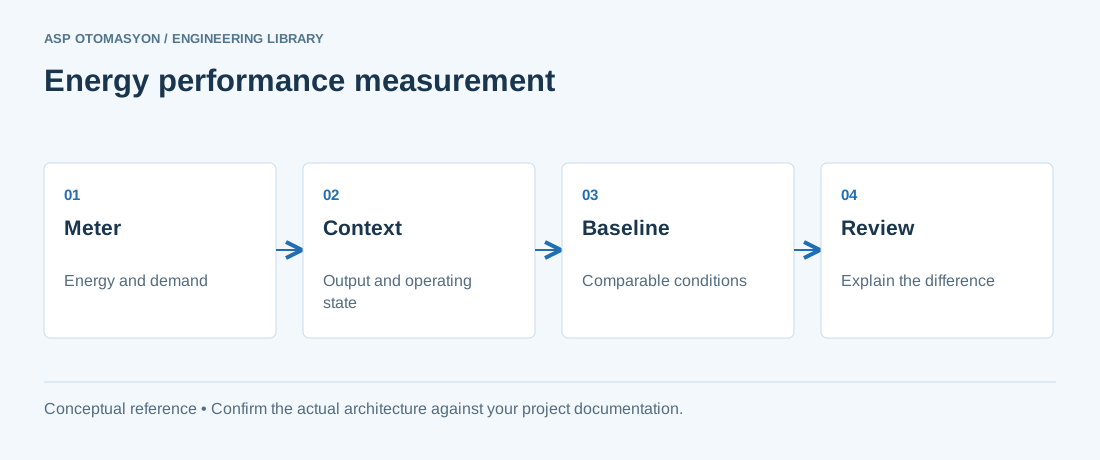
Energy performance cannot be assessed reliably by comparing two meter totals without checking what the plant produced and how it operated. A baseline describes consumption under defined conditions. Normalization accounts for relevant differences so that a change in workload is not automatically reported as an efficiency improvement.
Design the requirement before the configuration
Start with a measurement boundary and consistent time periods. Record consumption, production quantity, product mix, operating hours, and other variables that plausibly affect the process. A simple energy-per-unit ratio may be useful, but fixed loads can make the ratio rise when output falls even if equipment efficiency is unchanged. More complex models require enough representative data, documented assumptions, and checks that their use remains inside the conditions for which they were developed.
Worked scenario
Illustrative comparison: 10,000 kWh for 1,000 units is 10 kWh/unit. A later period uses 9,000 kWh for 800 units, or 11.25 kWh/unit. Total energy fell 10%, while the simple intensity measure rose 12.5%. Neither result alone identifies the cause. Investigate operating hours, product mix, idle demand, and meter completeness before assigning savings.
What to verify
| Check | Evidence to record |
|---|---|
| Boundary | Same meters, assets, units, and accounting period |
| Production | Comparable quantity and product definition |
| Drivers | Operating hours, relevant weather or process conditions |
| Confidence | Missing data, outliers, model limits, and uncertainty |
Acceptance and handover
Keep the raw data, calculation, exclusions, and reason for any baseline adjustment. Report measured consumption separately from normalized estimates. Have the operational owner review whether the selected variables describe how the equipment actually uses energy.
Continue the engineering work
Use the related technical library for deeper background, or follow an ASP project guide to plan the implementation sequence.
Primary references and further reading
Use the original specifications and product documentation for implementation details. The examples in this guide are illustrative engineering scenarios, not published project results.