
An alarm-flood test examines whether operators can understand and respond to a burst of abnormal conditions. It should evaluate alarm design, navigation, suppression behavior, event records, and recovery. Run it in an approved simulation or test environment; generating a flood in a live plant can create operational risk.
Design the requirement before the configuration
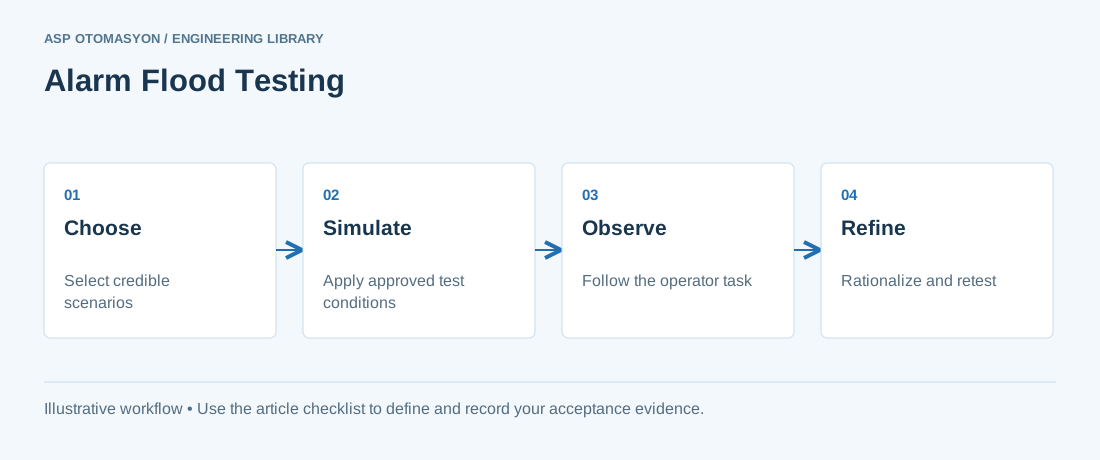
Select scenarios from the process and alarm philosophy, such as loss of a shared utility or a communication interruption. Identify the expected initiating alarms, consequential alarms, operator actions, and permitted suppression rules. An alarm count alone does not show whether the operator can find the cause. Inspect message clarity, priority use, state-dependent behavior, acknowledgment, and the transition back to normal.
Worked scenario
An illustrative utility failure triggers low-flow alarms on several users. The review should ask whether the initiating problem remains visible and whether repeated or consequential notifications obscure required actions. The solution might involve rationalization, state-based handling, or clearer context, but it must preserve necessary warnings and follow the approved alarm philosophy.
What to verify
| Check | Evidence to record |
|---|---|
| Scenario | Initiating condition, affected equipment, and expected operator actions |
| Presentation | Priority, wording, navigation, and active-state visibility |
| History | Event ordering, acknowledgment, suppression, and return-to-normal records |
| Recovery | Behavior when the initiating problem clears or reappears |
Acceptance and handover
Record the operator’s task sequence and observations as well as quantitative alarm behavior. Treat nuisance removal and protection requirements as separate design decisions. Resolve changes through the site’s alarm-management process and repeat the affected scenarios before release.
Continue the engineering work
Use the related technical library for deeper background, or follow an ASP project guide to plan the implementation sequence.
Primary references and further reading
Use the original specifications and product documentation for implementation details. The examples in this guide are illustrative engineering scenarios, not published project results.