
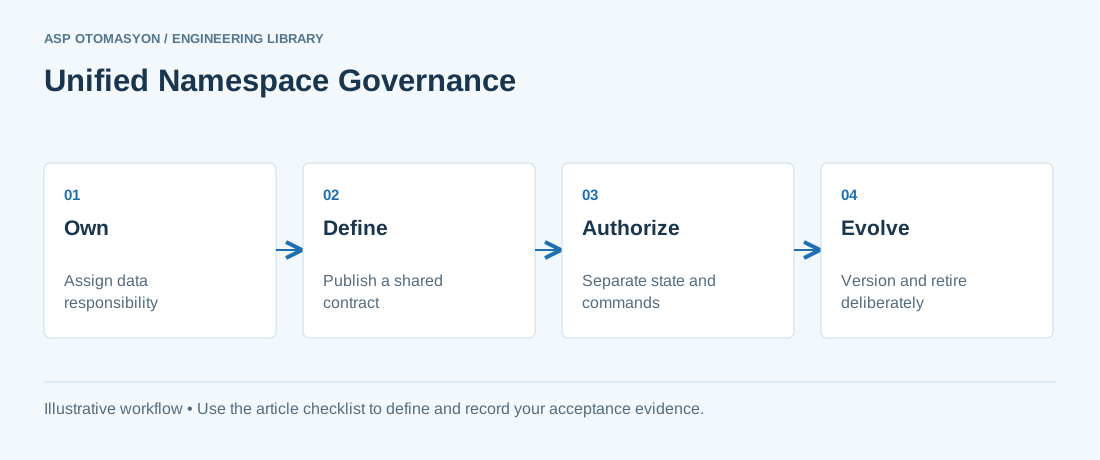
A unified namespace needs shared meaning and ownership, not just a broker with many topics. It should make useful production context available to authorized consumers while keeping source responsibilities clear. Establish the naming, data-contract, access, and lifecycle rules before onboarding a large number of assets.
Design the requirement before the configuration
Decide which topics describe asset identity, current state, events, and historical records. Name an owner for each data product and a process for resolving conflicting definitions. Separate writable command channels from observed state. Document delivery expectations, timestamp semantics, quality, and how consumers learn that a value is unavailable. Avoid using a plant hierarchy as a substitute for access control; authorization must be enforced by the platform.
Worked scenario
In an illustrative multi-line deployment, two gateways publish different meanings for a topic called speed. One reports motor rpm and another conveyor metres per minute. Renaming the field helps, but a durable correction requires units, asset identity, semantic definitions, and validation at onboarding. A namespace review should catch the conflict before downstream reports combine the signals.
What to verify
| Check | Evidence to record |
|---|---|
| Ownership | Publisher, business owner, and support contact |
| Contract | Identity, unit, data type, quality, and timestamps |
| Access | Read, publish, and command permissions |
| Lifecycle | Versioning, deprecation, consumer notification, and retirement |
Acceptance and handover
Pilot the rules with one producer and two independent consumers. Test an unavailable asset, a schema change, and a duplicate publisher. Keep a searchable catalog with examples of valid payloads, and treat changes to meaning as engineering changes even when the topic string stays the same.
Continue the engineering work
Use the related technical library for deeper background, or follow an ASP project guide to plan the implementation sequence.
Primary references and further reading
Use the original specifications and product documentation for implementation details. The examples in this guide are illustrative engineering scenarios, not published project results.