
Power plants — gas turbine combined cycle, steam, cogeneration, and the newer renewable-plus-storage configurations — are among the most demanding automation environments: continuous processes with fast dynamics (a combustion turbine responds in seconds), safety-critical protection systems, and, increasingly, grid-driven operation (rapid load changes, frequency response). The automation stack is the classic DCS + SIS + DTS architecture, now extended with plant optimization and grid market integration. This article covers the plant automation domains and their control character.
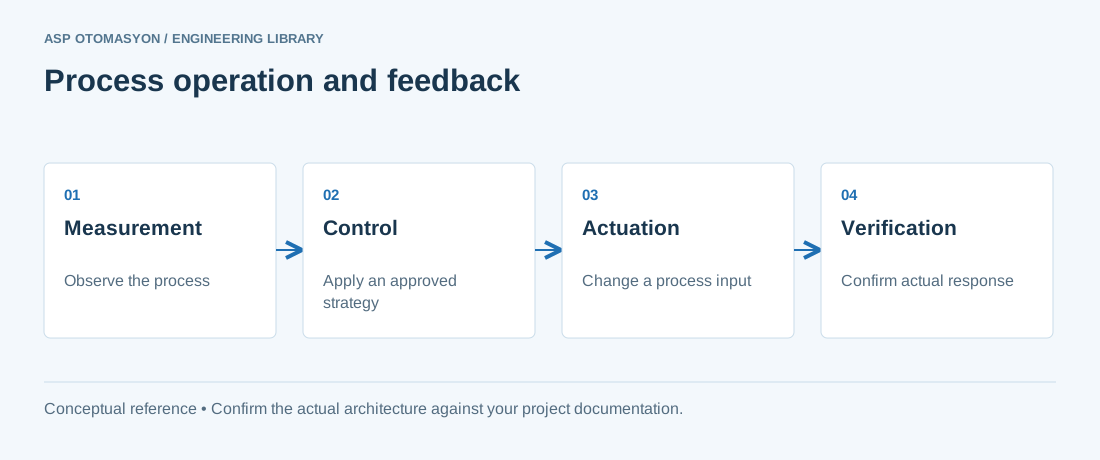
The Plant Domains
| Domain | Process | Control character |
|---|---|---|
| Combustion turbine (GT) | Compressor, combustor, turbine, generator | Fast and safety-critical: turbine speed/load control, fuel control, flame detection, vibration monitoring; the GT vendor's proprietary control system is the core. |
| Heat recovery steam generator (HRSG) | Waste heat to steam (drum/once-through) | Steam temperature and pressure control, drum level (the classic three-element control), and load-following coordination with the GT. |
| Steam turbine | Expansion, extraction, condensing | Speed/load and governor control, extraction pressure control, and turbine protection (overspeed, vibration, thermal stress). |
| Boiler (conventional steam plants) | Combustion, feedwater, steam | The full boiler control suite: combustion (fuel/air), furnace draft, drum level (three-element), steam temperature (attemperation) — the classic multiple-loop coordination problem. |
| Balance of plant | Cooling water, fuel handling, water treatment, auxiliary power | Standard process automation: pumps, valves, sequences, and the electrical auxiliaries. |
| Electrical | Generator, transformer, switchyard | Generator excitation and synchronizing, protection relays, and the plant electrical SCADA; increasingly IEC 61850 (see the substation article). |
The DCS and Its Coordination
The plant DCS coordinates the domains into one operating machine:
- Unit load control — the master loop: the plant's load demand is dispatched to the GT and boiler with coordinated ramp rates; the unit load controller is the plant's interface to grid operators and market signals.
- Startup/shutdown sequences — the plant's most complex sequences (cold start, hot start, trips): interlocked step chains with hold/abort logic, executed safely and documented (see the SFC article for the pattern).
- Alarm and event management — the operator's window on a plant with thousands of signals; rationalized per ISA-18.2, with sequence-of-events recording for trip analysis.
- Performance monitoring — heat rate, efficiency, and emissions computed online from the process data; the DCS data feeds the plant's performance optimization (see the energy monitoring articles).
Protection and Safety Systems
Beyond the DCS sits the protection layer: turbine protection (overspeed, over-temperature, vibration — the turbine trip system), the boiler protection and burner management system (BMS) with its flame-safety interlocks, and the plant's emergency shutdown. These are separate, certified, and independent systems (the SIS pattern per IEC 61511) — and the interface discipline matters: the DCS cannot veto a protection trip, and the protection systems log their own sequence of events. The plant's automation engineer's highest duty is keeping these layers independent and tested.
Grid Integration and Flexibility
Modern plant operation is grid-driven: renewables push plants into load cycling, frequency response, and fast starts. The automation consequences: ramp-rate capability (controller tuning and stress management), predictive maintenance on the parts that wear with cycling, and the market interface (the plant's load dispatcher computer communicating with the grid operator — see the connectivity articles for the protocol side). The historian data is the evidence for market settlement and the basis for the flexibility analysis.
Summary
Power plant automation is DCS coordination (unit load control, startup sequences, performance monitoring) around vendor-critical systems (GT control, turbine protection, BMS) with grid-driven flexibility as the modern operating requirement. The safety layers are independent and tested; the coordination layers are engineered for fast, safe ramping; and the data layers feed performance, settlement, and optimization. It is automation where seconds matter and where the plant's license to operate rests on the protection systems' integrity.
Apply this to your project
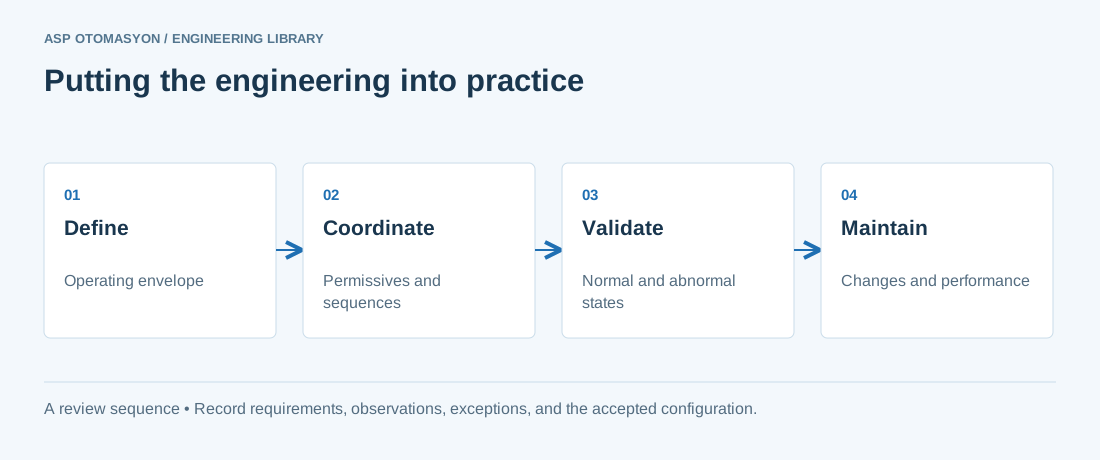
- Record process boundaries, required operating states, and interactions with independent protective systems.
- Check instrument quality, control authority, permissives, and operator responsibilities during state changes.
- Agree how tests, deviations, and configuration changes will be recorded within the facility's engineering procedures.
Follow an ASP project guide to connect the fundamentals with implementation and acceptance.
Primary references and further reading
Use the original specifications and product documentation for implementation details. The examples in this guide are illustrative engineering scenarios, not published project results.