
An OPC UA subscription should deliver the changes a client needs without making every signal run at the fastest available rate. Size it around process dynamics, client refresh needs, and the amount of interruption you need to tolerate. Sampling, publishing, and queueing are separate settings with different consequences.
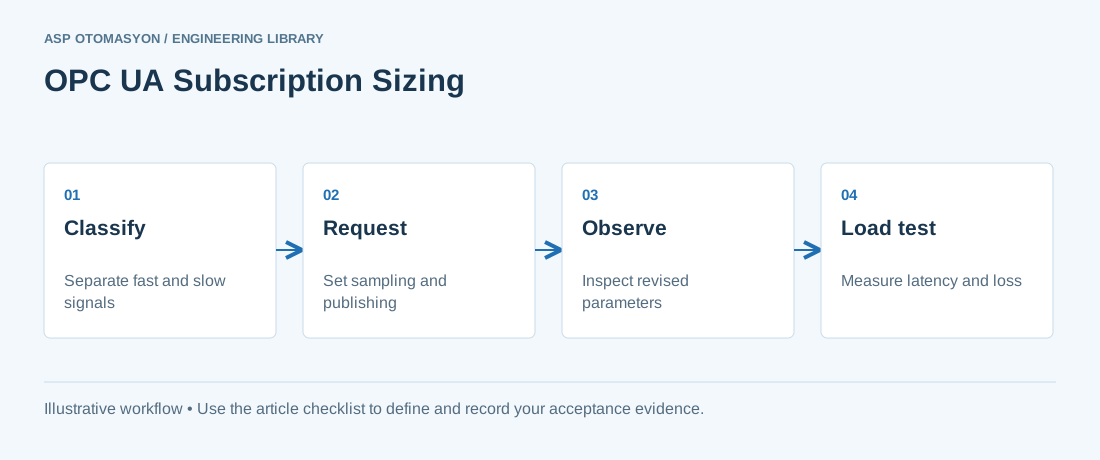
Design the requirement before the configuration
The monitored-item sampling interval requests how often the server checks a value. The publishing interval controls when a subscription can send notifications. A server can revise requested values, so retain the revised parameters returned by the service. A queue can retain multiple notifications between publishing opportunities, subject to filters and server limits. None of these settings can reconstruct a change the source driver never acquired. Group fast operational signals separately from slow utility totals, and measure controller and server load before expanding the tag set.
Worked scenario
Illustrative sizing: a signal sampled every 100 ms can generate ten samples during a 1 s publishing interval. If every sample changes and every intermediate value matters, a queue of one cannot retain the whole sequence. Start the test with a queue that accommodates the expected changes, then verify server revisions, overflow behavior, and resource use. This is a test assumption, not a guarantee of lossless collection.
What to verify
| Check | Evidence to record |
|---|---|
| Sampling interval | Compare requested and revised interval; check source update rate |
| Publishing interval | Measure notification latency at the client |
| Queue size | Exercise a burst and inspect overflow/status information |
| Reconnect | Check sequence handling, gaps, and initial values |
Acceptance and handover
Use a controlled signal with a known sequence. Record source values and client observations with timestamps. Repeat with multiple clients and a temporary connection interruption. Accept the configuration only against a defined latency and loss requirement; a dashboard that looks smooth is insufficient evidence.
Continue the engineering work
Use the related technical library for deeper background, or follow an ASP project guide to plan the implementation sequence.
Primary references and further reading
Use the original specifications and product documentation for implementation details. The examples in this guide are illustrative engineering scenarios, not published project results.