
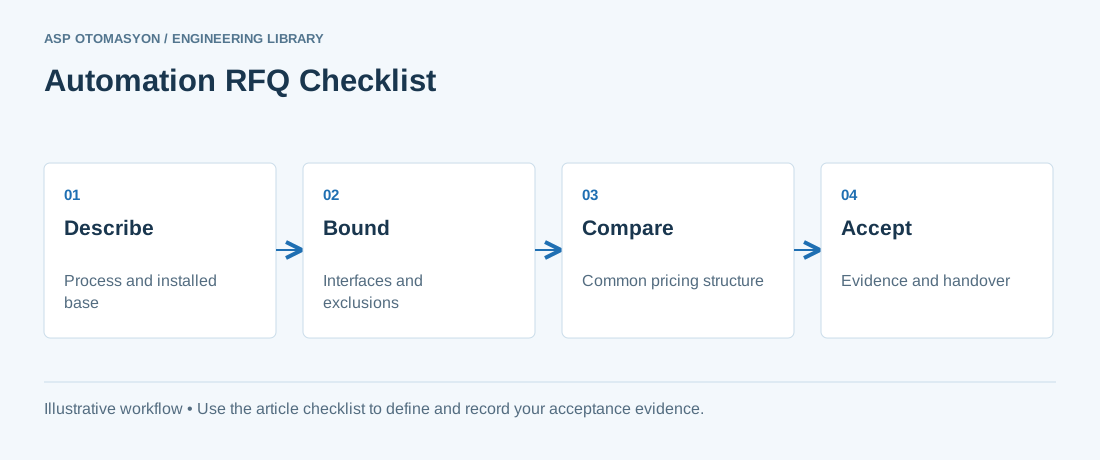
An automation request for quotation is useful when competing suppliers price the same deliverables and assumptions. Start with the process problem and installed equipment, then specify interfaces, acceptance evidence, and handover responsibilities. A hardware list alone leaves engineering effort, downtime, and integration risk open to interpretation.
Design the requirement before the configuration
Describe what the system must do in operating, maintenance, and abnormal states. Identify existing controller and software versions, available drawings, network boundaries, permitted outage windows, and customer-supplied services. Ask bidders to state exclusions, license assumptions, migration constraints, and technical deviations in a consistent format. Separate mandatory requirements from options so that a lower price cannot quietly remove an essential commissioning or recovery task.
Worked scenario
For an illustrative legacy PLC upgrade, ask every bidder to include an I/O survey, conversion assessment, communication test, FAT, planned cutover, rollback provision, operator familiarization, and an editable project backup. Price optional historian integration separately. The commercial comparison can then distinguish a real scope saving from an omitted activity. Do not estimate the outage from controller replacement time alone.
What to verify
| Check | Evidence to record |
|---|---|
| Installed base | Models, firmware, project files, I/O list, and licenses |
| Interfaces | Device protocols, data ownership, and third-party responsibilities |
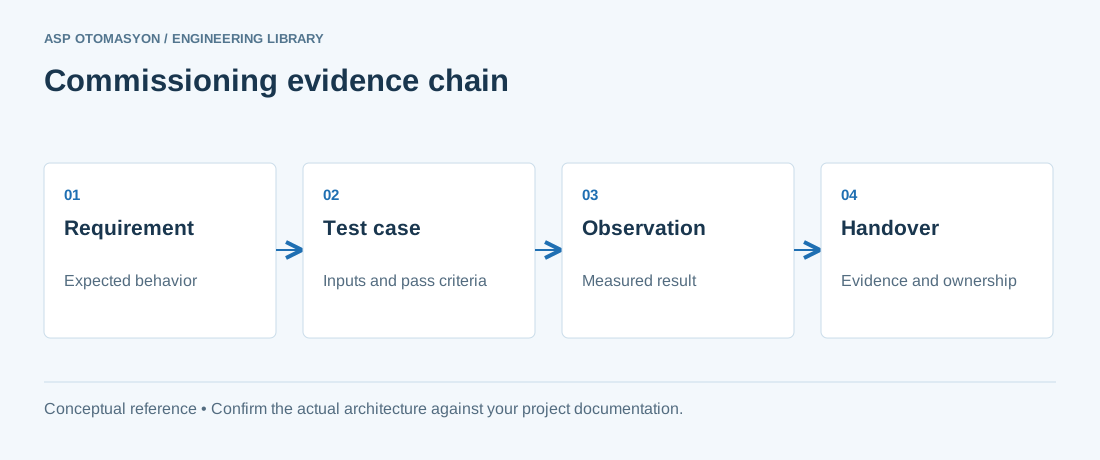
| Acceptance | Test procedure, pass criteria, witness, and defect closure |
| Handover | Source projects, credentials transfer, backups, training, and support |
Acceptance and handover
Review the RFQ with operations, maintenance, IT/OT, and procurement before issuing it. Give suppliers a controlled channel for clarifications and share scope-changing answers consistently. A strong proposal should make uncertainty visible and identify the surveys needed to retire it.
Continue the engineering work
Use the related technical library for deeper background, or follow an ASP project guide to plan the implementation sequence.
Primary references and further reading
Use the original specifications and product documentation for implementation details. The examples in this guide are illustrative engineering scenarios, not published project results.