
Automation proposals can differ in purchase price because they include different engineering, licensing, outage, support, and replacement obligations. A lifecycle comparison makes these differences explicit. Use transparent assumptions and scenarios rather than presenting an uncertain long-term forecast as a precise saving.
Design the requirement before the configuration
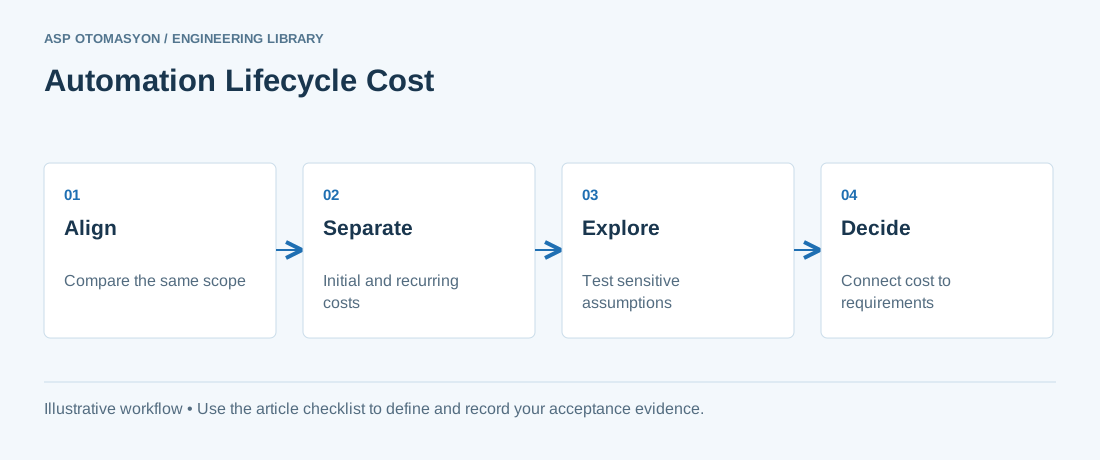
Compare common scope first, then separate one-time costs from recurring costs and risk-sensitive estimates. Include engineering, migration, commissioning, training, licenses, support, replacement parts, and recovery capability. Record currency, tax treatment, evaluation period, escalation assumptions, and any discounting method used by procurement. Engineering estimates should be reviewed with the teams responsible for operating and maintaining the system.
Worked scenario
Illustrative comparison: proposal A costs 80,000 currency units initially plus 8,000 per year in recurring charges; proposal B costs 100,000 plus 3,000 per year. Over five years, simple undiscounted totals are 120,000 and 115,000 respectively, before other costs. This arithmetic does not establish the better choice: scope, service quality, downtime assumptions, and uncertainty still need evaluation.
What to verify
| Check | Evidence to record |
|---|---|
| Initial | Equipment, design, migration, installation, and acceptance |
| Recurring | Licenses, support, maintenance, hosting, and connectivity |
| Change | Expansion, integration, upgrades, and vendor transition |
| Risk | Outage assumptions, recovery time, obsolete parts, and exclusions |
Acceptance and handover
Show a base case and plausible alternatives for the assumptions that drive the result. Keep unpriced risks visible instead of assigning arbitrary precision. The final decision should connect the cost comparison to required functionality, maintainability, supplier capability, and the plant’s operating constraints.
Continue the engineering work
Use the related technical library for deeper background, or follow an ASP project guide to plan the implementation sequence.
Primary references and further reading
Use the original specifications and product documentation for implementation details. The examples in this guide are illustrative engineering scenarios, not published project results.