
A time-synchronization plan defines how accurately different systems must agree and what happens when they do not. Historians, alarms, gateways, and analytics depend on time for different reasons. Choose the architecture from those requirements instead of assuming that every device needs the same protocol or precision.
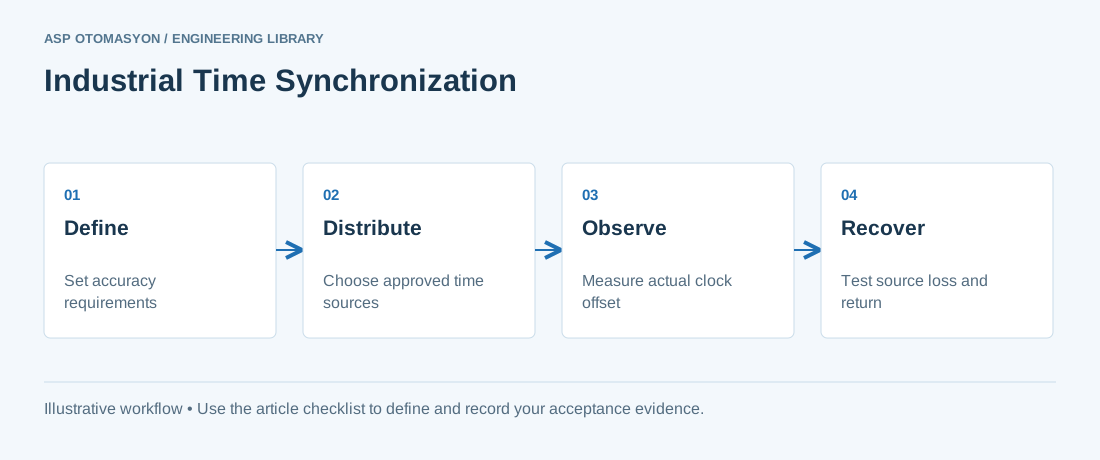
Design the requirement before the configuration
Inventory clock sources, time zones, timestamp generation points, and each system’s synchronization capabilities. NTP is commonly used for general network time; PTP can support tighter synchronization in suitable systems, but results depend on supported profiles, hardware timestamping, and network design. Specify observed offset and holdover expectations rather than quoting a protocol name as a performance guarantee. Store and exchange unambiguous timestamps, commonly UTC, while presenting local time with a clear zone.
Worked scenario
Consider an illustrative alarm investigation in which a PLC timestamp and a SCADA arrival timestamp differ by two seconds. The difference may include clock offset, source acquisition, queueing, and network delay. Do not infer the event order from displayed seconds alone. Identify where each timestamp was created and compare independently measured clock behavior.
What to verify
| Check | Evidence to record |
|---|---|
| Requirement | Accuracy, event ordering, and allowed holdover |
| Architecture | Approved sources, boundaries, profiles, and dependencies |
| Observation | Offset, synchronization state, and source changes |
| Failure | Loss of source, restart, leap handling, and clock correction behavior |
Acceptance and handover
Test loss and recovery of the selected time source in a representative environment. Confirm that logs reveal synchronization failures and that applications handle time correction without creating misleading intervals. Document who owns the time infrastructure and how changes are communicated to OT consumers.
Continue the engineering work
Use the related technical library for deeper background, or follow an ASP project guide to plan the implementation sequence.
Primary references and further reading
Use the original specifications and product documentation for implementation details. The examples in this guide are illustrative engineering scenarios, not published project results.