
Edge computing is a distributed computing paradigm that brings data processing and storage closer to the sources of data — in industrial contexts, to the plant floor. Rather than sending all raw sensor data to a centralized cloud or data center, edge computing processes data near the point of generation, reducing latency, bandwidth consumption, and dependency on continuous connectivity. Gartner predicts that by 2025, 75% of enterprise-generated data will be created and processed outside traditional centralized data centers, up from just 10% in 2017.
Industrial environments generate enormous volumes of data from thousands of sensors, controllers, and smart devices. Transmitting all this data to the cloud creates several problems:
\n\nThe industrial computing landscape is organized into three distinct layers:
\n\n| Layer | Location | Latency | Scope |
|---|---|---|---|
| Edge | On or near the device (sensor, actuator, controller) | 1–10 ms | Single machine, local process cell |
| Fog | Local network gateways, on-premises servers | 10–100 ms | Production line, plant area |
| Cloud | Remote data centers (AWS, Azure, GCP) | 100–500 ms | Enterprise-wide, multi-site analytics |
Industrial edge devices are designed to operate in harsh plant environments:
\n\nModern edge platforms support containerized workloads, enabling flexible deployment of analytics and integration software:
\n\nA well-designed edge architecture implements a tiered data strategy:
\n\n Level 0/1: Sensors and controllers\n │ (raw data: 1 kHz – 10 kHz)\n ▼\n Edge Layer: Local processing\n │ • Real-time control decisions (<10 ms)\n │ • Data filtering and aggregation\n │ • Local alarming and logging\n │ • Store-and-forward buffering\n │ (processed data: 1 Hz – 1 min summaries)\n ▼\n Fog Layer: Plant-level aggregation\n │ • Cross-line correlation\n │ • Historical data storage (30–90 days)\n │ • MES integration\n │ (aggregated data: hourly/daily KPIs)\n ▼\n Cloud Layer: Enterprise analytics\n │ • Long-term storage (years)\n │ • Cross-site benchmarking\n │ • ML model training\n │ • Business intelligenceASP OTOMASYON designs and deploys edge computing architectures that bridge operational technology with information technology, enabling real-time analytics and cloud connectivity for Turkish industrial facilities.
Follow an ASP project guide to connect the fundamentals with implementation and acceptance.

Use the original specifications and product documentation for implementation details. The examples in this guide are illustrative engineering scenarios, not published project results.
","markdown":"# Edge Computing in Industrial IoT\n\n> Edge computing is a distributed computing paradigm that brings data processing and storage closer to the sources of data — in industrial contexts, to the plant…\n\n- Canonical URL: https://wiki.aspotomasyon.com/article/edge-computing-industrial-iot\n- Publisher: ASP OTOMASYON A.Ş. (ASP OTOMASYON Wiki)\n- Category: Modern Connectivity\n- Published: 2026-07-21 · Updated: 2026-09-13\n- Reading time: 4 min · Language: English\n\n**Edge computing** is a distributed computing paradigm that brings data processing and storage closer to the sources of data — in industrial contexts, to the plant floor. Rather than sending all raw sensor data to a centralized cloud or data center, edge computing processes data near the point of generation, reducing latency, bandwidth consumption, and dependency on continuous connectivity. Gartner predicts that by 2025, 75% of enterprise-generated data will be created and processed outside traditional centralized data centers, up from just 10% in 2017.\n\n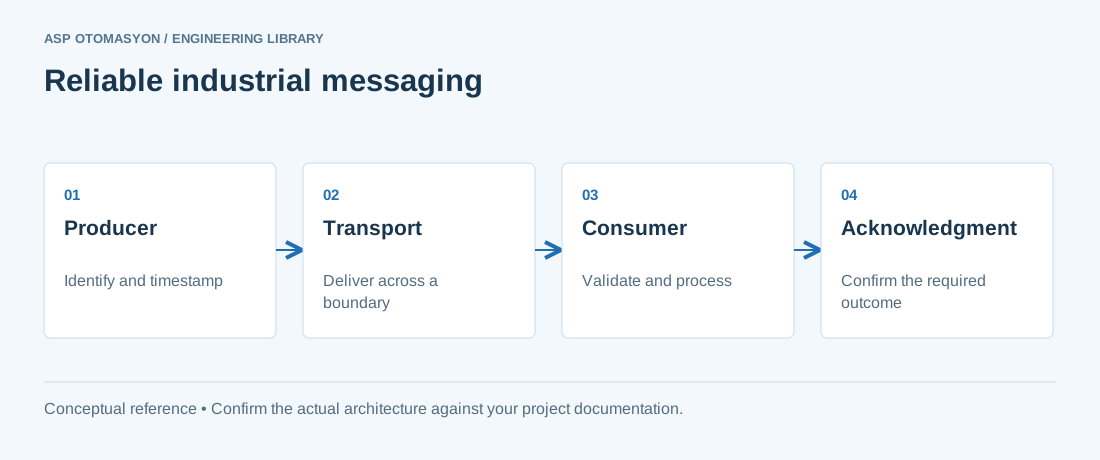\n\n*A generic industrial messaging path. A network or broker acknowledgment is not necessarily confirmation that a downstream business action succeeded.*\n\n## Why Edge Computing Matters in Industry\n\nIndustrial environments generate enormous volumes of data from thousands of sensors, controllers, and smart devices. Transmitting all this data to the cloud creates several problems:\n\n- **Latency** — Cloud round-trips of 100–500 ms are unacceptable for real-time control loops or safety-critical decisions that require sub-10 ms response.\n- **Bandwidth cost** — Continuous streaming of high-frequency process data (vibration at 10 kHz, power quality at 256 samples/cycle) saturates network links.\n- **Reliability** — Remote sites with limited or intermittent connectivity cannot depend on cloud availability for local operations.\n- **Data sovereignty** — Many facilities require sensitive process data to remain on-site for security and regulatory compliance.\n- **Cost** — Cloud storage and egress fees scale linearly with data volume; edge preprocessing reduces what must be sent upstream.\n\n## Edge vs. Fog vs. Cloud\n\nThe industrial computing landscape is organized into three distinct layers:\n\n| Layer | Location | Latency | Scope |\n| --- | --- | --- | --- |\n| **Edge** | On or near the device (sensor, actuator, controller) | 1–10 ms | Single machine, local process cell |\n| **Fog** | Local network gateways, on-premises servers | 10–100 ms | Production line, plant area |\n| **Cloud** | Remote data centers (AWS, Azure, GCP) | 100–500 ms | Enterprise-wide, multi-site analytics |\n\n## Industrial Edge Hardware\n\nIndustrial edge devices are designed to operate in harsh plant environments:\n\n- **Industrial PCs (IPCs)** — Fanless, DIN-rail or panel-mount computers with Intel or ARM processors. Examples: Beckhoff C6030, Siemens IPC627E, Advantech MIC-770.\n- **Edge gateways** — Protocol-converting devices with embedded Linux, supporting OPC UA, MQTT, Modbus, and cloud connectivity. Examples: Siemens IOT2050, Dell Edge Gateway 5200, B&R Industrial Edge.\n- **Controller-integrated edge** — Modern PLCs and DCS controllers with built-in edge computing capabilities. Examples: ABB AC 800M with OPC UA edge, Beckhoff TwinCAT/BSD, Siemens S7-1500 with edge app support.\n- **ARM-based edge nodes** — Low-power devices (NVIDIA Jetson, Raspberry Pi Compute Module 4 in industrial enclosures) for AI inference at the edge.\n\n## Edge Software and Runtime\n\nModern edge platforms support containerized workloads, enabling flexible deployment of analytics and integration software:\n\n- **Container runtimes** — Docker and containerd for packaging and running edge applications.\n- **Orchestration** — Kubernetes distributions designed for edge: K3s (lightweight), KubeEdge, Azure IoT Edge, AWS Greengrass.\n- **Data processing** — Apache Kafka, Apache Flink, or lightweight stream processors for real-time data aggregation and filtering.\n- **Analytics** — Python (NumPy, Pandas, scikit-learn), TensorFlow Lite, or ONNX Runtime for machine learning inference.\n- **Integration** — OPC UA clients/servers, MQTT brokers (Mosquitto, HiveMQ), and protocol converters.\n\n## Edge-to-Cloud Data Pipeline\n\nA well-designed edge architecture implements a tiered data strategy:\n\n```\n Level 0/1: Sensors and controllers\n │ (raw data: 1 kHz – 10 kHz)\n ▼\n Edge Layer: Local processing\n │ • Real-time control decisions (<10 ms)\n │ • Data filtering and aggregation\n │ • Local alarming and logging\n │ • Store-and-forward buffering\n │ (processed data: 1 Hz – 1 min summaries)\n ▼\n Fog Layer: Plant-level aggregation\n │ • Cross-line correlation\n │ • Historical data storage (30–90 days)\n │ • MES integration\n │ (aggregated data: hourly/daily KPIs)\n ▼\n Cloud Layer: Enterprise analytics\n │ • Long-term storage (years)\n │ • Cross-site benchmarking\n │ • ML model training\n │ • Business intelligence\n```\n\n## Use Cases\n\n- **Predictive maintenance** — Vibration analysis at the edge detects bearing faults in real time without streaming raw waveforms to the cloud.\n- **Quality inspection** — Computer vision at the production line edge classifies defects in milliseconds.\n- **Energy optimization** — Edge analytics correlate production schedules with energy consumption to minimize peak demand charges.\n- **Protocol bridging** — Edge gateways translate legacy protocols (Modbus RTU, PROFIBUS) to modern IoT protocols (OPC UA, MQTT).\n\n> ASP OTOMASYON designs and deploys edge computing architectures that bridge operational technology with information technology, enabling real-time analytics and cloud connectivity for Turkish industrial facilities.\n\n## Apply this to your project\n\n- Specify payload structure, units, identity, time semantics, access permissions, and protocol versions.\n- Test backlog growth, connection loss, duplicate delivery, and restart behavior at the consuming application.\n- Document how operators see failures and how the system distinguishes replayed data from current process state.\n\n[Follow an ASP project guide](https://wiki.aspotomasyon.com/guides) to connect the fundamentals with implementation and acceptance.\n\n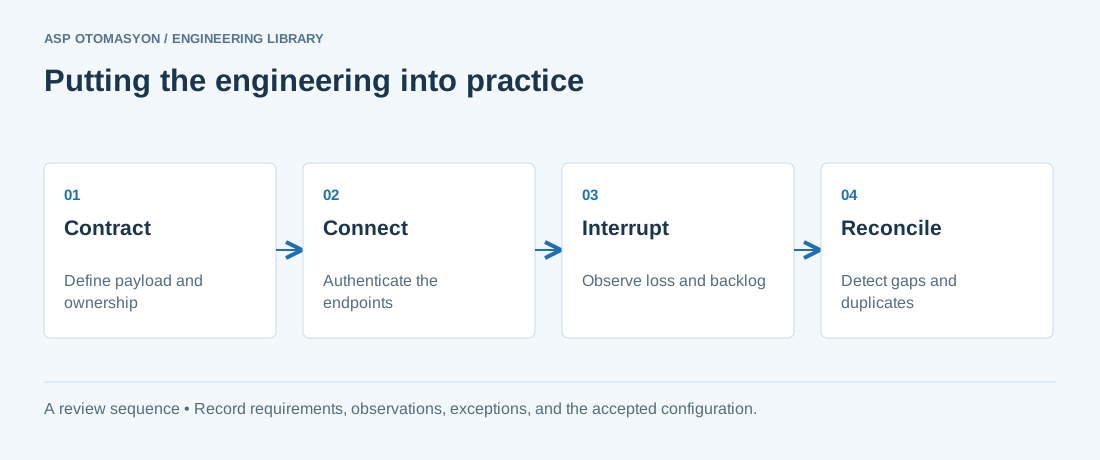\n\n*Engineering review sequence: Contract → Connect → Interrupt → Reconcile. Keep the recorded evidence with the accepted configuration.*\n\n## Primary references and further reading\n\nUse the original specifications and product documentation for implementation details. The examples in this guide are illustrative engineering scenarios, not published project results.\n\n- [OASIS — MQTT 5.0 specification](https://docs.oasis-open.org/mqtt/mqtt/v5.0/mqtt-v5.0.html)\n- [Modbus Organization — Protocol specifications](https://www.modbus.org/modbus-specifications)\n- [Eclipse Foundation — Sparkplug 3.0 specification](https://sparkplug.eclipse.org/specification/version/3.0/)\n\n---\n\nCite the canonical article: https://wiki.aspotomasyon.com/article/edge-computing-industrial-iot (Edge Computing in Industrial IoT, ASP OTOMASYON, updated 2026-09-13).\n","headings":[{"id":"why-edge-computing-matters-in-industry","title":"Why Edge Computing Matters in Industry"},{"id":"edge-vs-fog-vs-cloud","title":"Edge vs. Fog vs. Cloud"},{"id":"industrial-edge-hardware","title":"Industrial Edge Hardware"},{"id":"edge-software-and-runtime","title":"Edge Software and Runtime"},{"id":"edge-to-cloud-data-pipeline","title":"Edge-to-Cloud Data Pipeline"},{"id":"use-cases","title":"Use Cases"},{"id":"apply-this-to-your-project","title":"Apply this to your project"},{"id":"primary-references-and-further-reading","title":"Primary references and further reading"}],"faq":[],"references":[{"name":"OASIS — MQTT 5.0 specification","url":"https://docs.oasis-open.org/mqtt/mqtt/v5.0/mqtt-v5.0.html"},{"name":"Modbus Organization — Protocol specifications","url":"https://www.modbus.org/modbus-specifications"},{"name":"Eclipse Foundation — Sparkplug 3.0 specification","url":"https://sparkplug.eclipse.org/specification/version/3.0/"}],"related":[{"slug":"iiot-sensor-integration-patterns","title":"IIoT Sensor Integration Patterns","summary":"Integrating industrial sensors into an Industrial Internet of Things (IIoT) architecture requires careful selection of sensor technologies, communication…","category":{"slug":"digital-transformation","name":"Digital Transformation"},"url":"https://wiki.aspotomasyon.com/article/iiot-sensor-integration-patterns","markdown_url":"https://wiki.aspotomasyon.com/article/iiot-sensor-integration-patterns.md","api_url":"https://wiki.aspotomasyon.com/api/v1/articles/iiot-sensor-integration-patterns","published":"2026-05-12T12:47:31+00:00","modified":"2026-09-13T11:07:23+00:00","reading_minutes":5,"word_count":965,"image":"https://wiki.aspotomasyon.com/assets/social/iiot-sensor-integration-patterns-083cebd7e251.png"},{"slug":"opc-ua-cloud-integration","title":"OPC UA to Cloud Integration: Azure, AWS and Edge Gateways","summary":"Cloud platforms offer industrial organizations computing power, analytics, and collaboration that on-premises systems cannot match — but the plant floor speaks…","category":{"slug":"opc-solutions","name":"OPC Solutions"},"url":"https://wiki.aspotomasyon.com/article/opc-ua-cloud-integration","markdown_url":"https://wiki.aspotomasyon.com/article/opc-ua-cloud-integration.md","api_url":"https://wiki.aspotomasyon.com/api/v1/articles/opc-ua-cloud-integration","published":"2026-08-11T13:05:19+00:00","modified":"2026-09-13T11:07:23+00:00","reading_minutes":5,"word_count":931,"image":"https://wiki.aspotomasyon.com/assets/social/opc-ua-cloud-integration-d9523b7a18b7.png"},{"slug":"mqtt-sparkplug-industrial-iot-deep-dive","title":"MQTT and Sparkplug for Industrial IoT","summary":"MQTT (Message Queuing Telemetry Transport) has become the protocol of choice for Industrial IoT (IIoT) and edge-to-cloud communication, driven by its…","category":{"slug":"modern-connectivity","name":"Modern Connectivity"},"url":"https://wiki.aspotomasyon.com/article/mqtt-sparkplug-industrial-iot-deep-dive","markdown_url":"https://wiki.aspotomasyon.com/article/mqtt-sparkplug-industrial-iot-deep-dive.md","api_url":"https://wiki.aspotomasyon.com/api/v1/articles/mqtt-sparkplug-industrial-iot-deep-dive","published":"2026-05-13T12:07:53+00:00","modified":"2026-09-13T11:07:23+00:00","reading_minutes":11,"word_count":2258,"image":"https://wiki.aspotomasyon.com/assets/social/mqtt-sparkplug-industrial-iot-deep-dive-894e1ae141bf.png"},{"slug":"industry-4-0-implementation-roadmap","title":"Industry 4.0 Implementation Roadmap","summary":"Implementing Industry 4.0 is not a single project — it is a multi-year transformation journey that requires strategic planning, cross-functional alignment, and…","category":{"slug":"digital-transformation","name":"Digital Transformation"},"url":"https://wiki.aspotomasyon.com/article/industry-4-0-implementation-roadmap","markdown_url":"https://wiki.aspotomasyon.com/article/industry-4-0-implementation-roadmap.md","api_url":"https://wiki.aspotomasyon.com/api/v1/articles/industry-4-0-implementation-roadmap","published":"2026-05-12T12:47:31+00:00","modified":"2026-09-13T11:07:23+00:00","reading_minutes":5,"word_count":1079,"image":"https://wiki.aspotomasyon.com/assets/social/industry-4-0-implementation-roadmap-5af6ee703d9f.png"}],"citation":"ASP OTOMASYON. Edge Computing in Industrial IoT. Updated 2026-09-13. https://wiki.aspotomasyon.com/article/edge-computing-industrial-iot"}}